





































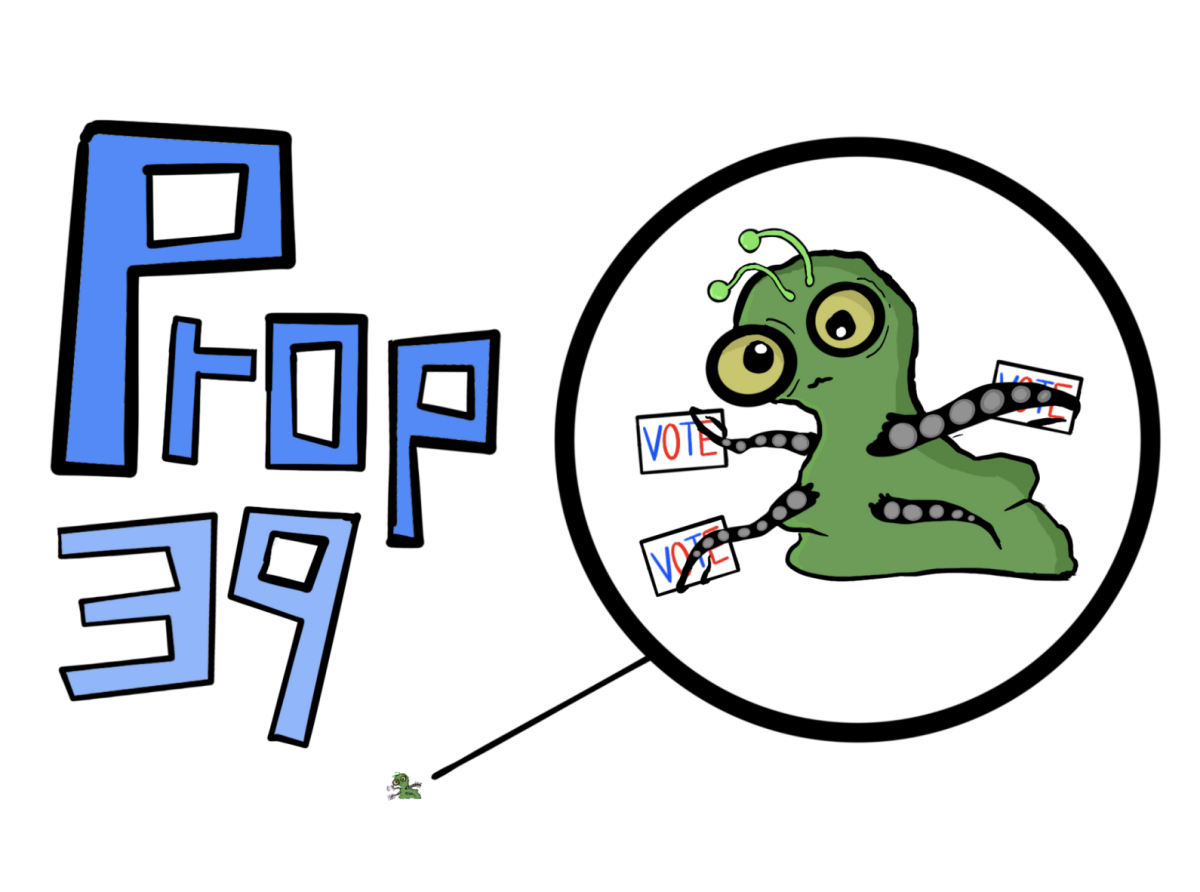










































The introduction of Proposition 39 and Trump’s recent claims about rampant voter fraud raise the question of whether voter fraud is common. The short answer is it’s virtually nonexistent. According to The National Investigative Unit, since 2016, there have been only 513 proven voter fraud cases that led to legal action in the United States. Those 513 cases took place during a period when over 685 million votes were cast across the nation. The fact that only 0.00007489% of US votes were considered fraudulent during this period speaks to strong preexisting voting regulations in the states. For example, in California, a person must declare that they meet voter eligibility requirements in writing. False citizenship claims would cause the person to face felony charges and possibly deportation. With such legal penalties in mind, an undocumented immigrant would be highly unlikely to risk committing voter fraud.
Adding new voter ID requirements would cause millions—particularly voters without a formal education, those who earn lower incomes, and racial and ethnic minorities—to lose the incentive to vote. Many eligible voters, especially in immigrant and mixed-status communities, already hesitate to interact with government systems due to concerns about their privacy and the handling of their personal information, so adding strict ID laws would likely increase that uncertainty due to the increased risk of identity theft. In addition, a study from the University of Chicago Press Journals found that Democratic turnout dropped by about 8.8 predicted percentage points in primary elections following the introduction of more intense voter ID laws, while Republican turnout fell by only 3.6 percentage points. This pattern emerges from the fact that marginalized communities that suffer the most from these laws tend to lean Democratic. Taking advantage of this trend, Trump and the Republican Party are threatening to strip people of their right to vote in an attempt to hold onto their authoritarian power.
Implementing more extreme voter ID laws like Prop 39 would drive up state and local government costs by tens of millions dollars. The money to provide free IDs would be sourced straight from the pockets of everyday American taxpayers and away from vital government programs. Since voter fraud incidents are virtually nonexistent, taxpayer funds should not be wasted on problems that don’t even exist in the first place. Aside from the physical ID itself, states would also need to invest money into updated voting systems, new ballot design, and public education campaigns about changes to law. These costs, which would be substantial on their own, only account for indirect voter expenses. Securing an ID comes with numerous hidden costs for the voter. To prove who you are to the government, you will need to order a certified birth certificate, which can cost anywhere from $15 to $50 dollars. Additionally, voters will need to factor in the cost of transport to get to a DMV or election office. These offices are only open during limited government hours, so a voter would potentially need to take time off work in order to obtain a voter ID. It is overwhelmingly evident that this process not only interferes with the lives of American citizens, but also the government programs they benefit from.
Voting gives people a say in the public policies that affect their lives and communities, and when politicians try to pick which voters count by making it harder to vote, they are making it harder to have fair representation. In a country built on equal protection under law, it is vital to ensure that representation is not reduced to party preference. Your voice matters, do not let people take it away.