











































































Labels can be a home. Within their respective communities, labels have created a sense of connection and camaraderie. Especially in an increasingly polarized society, people have embraced labels more than ever. These labels range from political affiliations to sexuality to national identity. But how can a label further the cause of equality when so many people are reluctant to accept it? For many, “feminist” is not a badge of solidarity but a word that provokes apprehension.
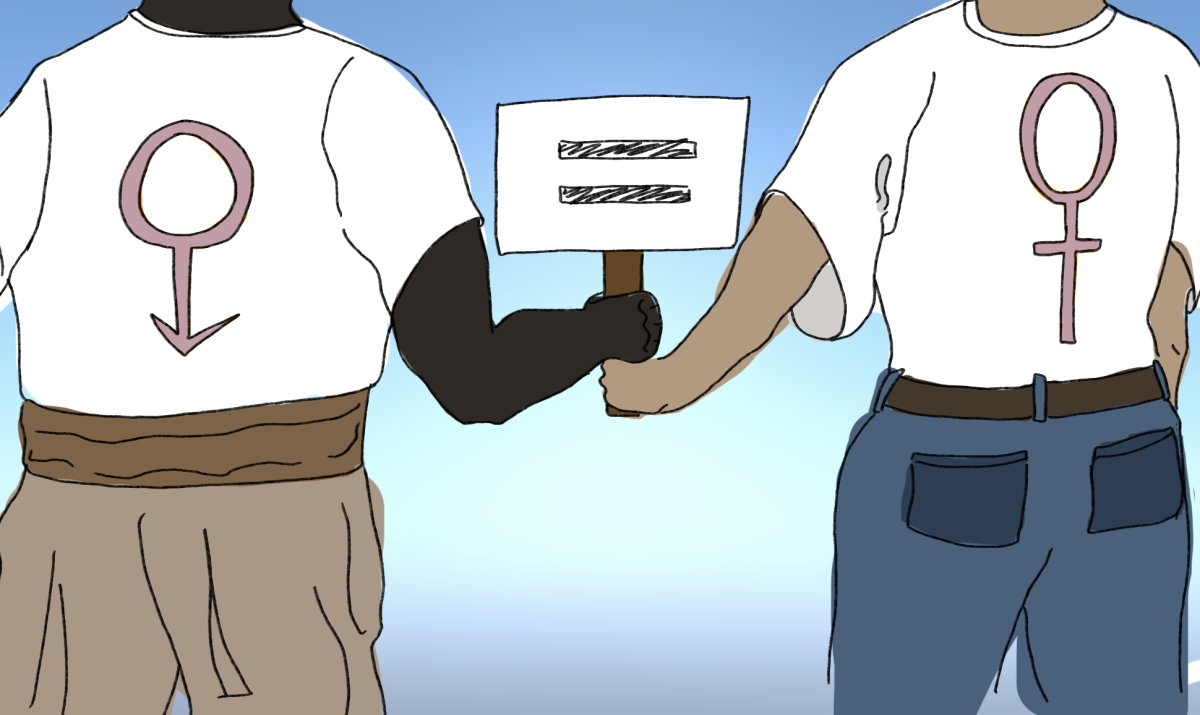
The fear of feminism stems from two core ideas: misconceptions and fragile masculinity. UN Women define feminism as “the belief that everyone, regardless of gender, should have equal rights and opportunities.” According to Merriam-Webster, feminism means “belief in and advocacy of the political, economic, and social equality of the sexes expressed especially through organized activity on behalf of women’s rights and interests.” So, if feminism is simply the pursuit of equality, what makes the label so threatening?
The answer lies in misinformation. Some see the word “feminism,” recognize its association with the Latin root femina, meaning woman, and assume feminism is inherently centered on women rather than equality. This misunderstanding is further reinforced by the male-centered language around universal terms such as “mankind” and “human.” Feminism is one of the few words in the English dictionary that pertains to all people, yet does not have a masculine root. Others misinterpret feminism as a philosophy that places women above men, rather than promoting equality. This perception emanates from the fact that feminist movements have focused primarily on advancing women’s rights. Because women have encountered significantly more social and political barriers, women’s rights have been the central focus of feminism.
Similarly, fragile masculinity presents another obstacle. Some men hesitate to associate with feminism because they conflate feminism with femininity and fear that embracing the label will make them appear less masculine. This discomfort reflects the tendency to view femininity as incompatible with masculinity, which further reinforces internalized misogyny by suggesting that anything and everything is devalued solely because it is associated with women and femininity.
Some may argue that if feminism simply means equality, and women now possess the same legal rights as men in the US, then feminists are no longer necessary. However, legal equality does not necessarily constitute systemic equity. Women repeatedly confront systemic barriers, including healthcare disparities, the gender pay gap, and significant discrepancies in women’s health research. These barriers demonstrate that equality under U.S. law does not automatically eliminate social and institutional obstacles women experience every day. Therefore, feminism remains relevant not because women lack legal rights, but rather because having rights and being fully empowered to exercise them are not the same.
The label “feminist” grants greater visibility to these enduring disparities. It creates a collective identity through which people can champion an issue that may otherwise remain overlooked. Feminism is not about putting women above men, but simply recognizing where equality is incomplete and then working to close those gaps accordingly.
A label should unite people behind a shared cause, not alienate potential supporters. Yet feminists continue to be burdened by misinformation, gendered assumptions, and the social implications of identifying with the label. The word’s stigma often overshadows its fundamental meaning: the pursuit of equality. Feminism is not about women rising above men or men surrendering their masculinity; it calls on society to recognize where inequality remains and challenge it. The discourse surrounding feminism must shift from whether someone is unwilling to claim the label of “feminist” to whether they are rejecting the equality it represents.