






































































What does it take to build a robot? In Saint Francis’s robotics club, students are able to get an inside look at how to build a robot of their own.
The robotics club was created to give students the opportunity to explore robotics as a future interest and does not require any experience to join, open to anyone who wants to explore robotics so long as they are willing to learn and work with others. For the first eight weeks after the school’s activity fair, students meet for two hours every week. The club offers early and late sessions to accommodate those who play sports as well. During the sessions, members learn to code and use power tools and electronics, so they can build their own robot. This robot will then compete against other student teams’ robots on Nov. 6 in the annual Saint Francis High School Minibots Competition.
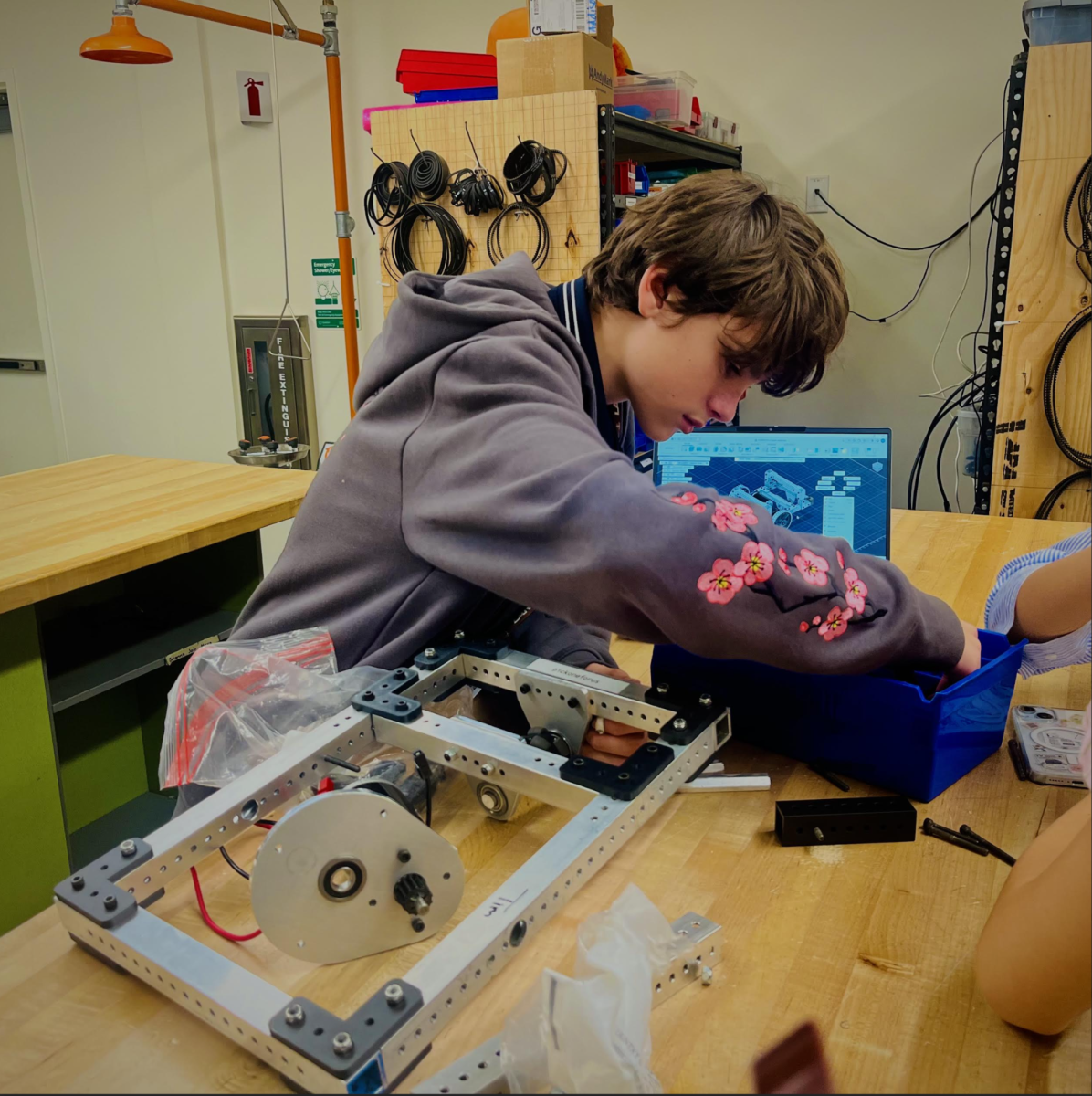
After covering safety training, teams dive headfirst into building their robot—but wait, they must first decide on a team name. Many of the teams dedicate their names to their club leaders, such as “Team Vishnu” and “Michael’s Fan Club.” After they finish building the main frame based on the club’s computer-aided design and the example bot, teams split into mini subteams. This just means they will begin to specialize in what they want to do regarding the robot. Members have three different subteams to choose from: fabrication, electronics, and code. Everyone starts out on fabrication, the main goal being to get a robot built. Electronics essentially concentrates on all of the wiring that connects the motors and possibly a manipulator to the “brain” of the robot. Then, the team members on code learn how to tell the “brain” what to do through Python. While most people assume fabrication is the most important, all of these subteams work hand in hand. A functioning robot does not exist without all of these different parts of the team. This system is also used in the school’s main First Robotics Competition (FRC) team, where the design, fabrication, electronics, and code subteams all work together to make the robot competition ready.
Though each team builds based on the same design, there are a couple of factors differentiating the teams for the minibots competition, such as manipulators. A manipulator is an attachment to the existing robot to help complete whatever challenge needs to be done. In this case, teams could add a manipulator to assist with the high goal. For example, they could create an elevator lift, which would help lift the game piece up to drop it in the high goal. While this is not necessary to be able to score points, the high goal is worth more. Another distinguishing element is the amount of driving practice teams get. Driving practice is severely overlooked when it comes to competitions, but is still an important aspect to think about. Being comfortable with driving and controlling the robot pays off when it comes to the match. The amount of driving practice a team gets is dependent on how quickly they can put together a working robot within the eight weeks.
Near the end of the fall minibots season, applications for the official school FRC Team open to all club members. Every year there are around sixty applications, but only about a third are accepted, since spots are limited. Anyone can show up to the school’s competitions for minibots or FRC to support classmates or to learn more about robotics.
Students are invited to join on Nov. 6 on campus to see the teams compete!