











































































We can all get along. We all have the same goals. We just need to find the middle ground.
Sounds promising, doesn’t it? Axioms of unification, messages of collaboration, and expressions of hope.
In reality, they are proverbs of delusion, rationalizations of injustice, and catchphrases of the elite.
No one contests the fact that polarization in the United States has reached a fever pitch. Bipartisan efforts to advance once universally agreed-upon ideals are now like endangered species; they have either gone extinct or been adopted as the personal attack dog of a party. We traded Athens for Sparta.
The middle ground didn’t simply die; it was martyred, then quickly deified in our temple of democracy. Media pundits now look back at those days with an almost wistful fondness, disparaging the current divide as improper and even irrational.
The quixotic conception of the ideological middle as the hallowed grounds on which we must erect our democratic institutions quickly falls apart when we realize that this seemingly solid foundation is little more than ever-shifting quicksand. In America’s nascent stage, the Founding Fathers chose the middle ground on several issues, the most prominent of which being slavery. By choosing to consciously condone the practice—the middle ground at the time—they set off a sequence that not only guaranteed the violent bifurcation of our nation, but put nearly ten million people through the horrors of American slavery. Was that the right middle ground to choose?
Sifting through countless past examples ranging from the gutting of the Voting Rights Act in the name of “states’ rights” to the bipartisan deregulation that crashed our economy in 2008, the historical record is clear: the political center is often where progress goes to die.
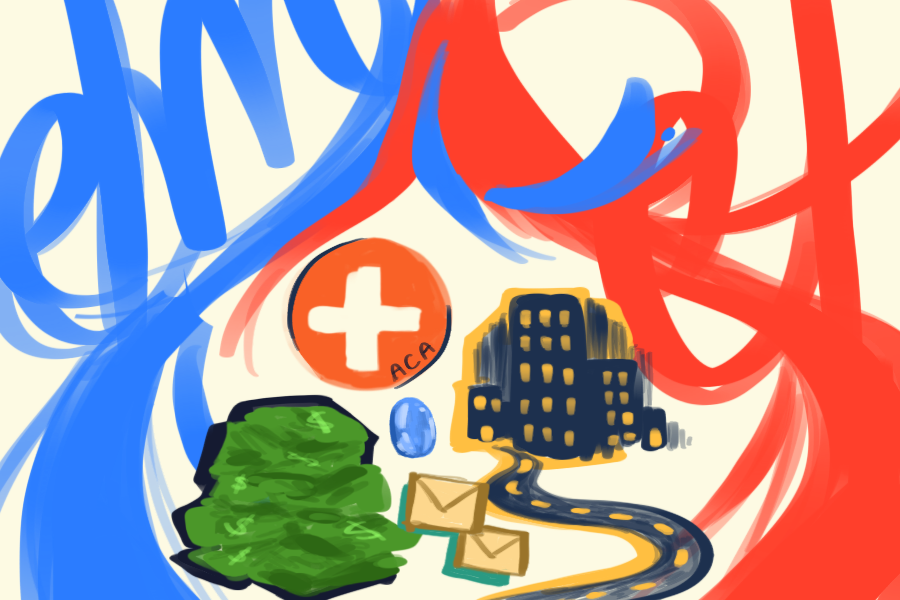
In a recent interview with ABC News, Obama was asked what he considered his biggest accomplishment to be. He responded by describing the Affordable Care Act (ACA). By all metrics, the ACA was a monumental win in healthcare access for millions of citizens, an accomplishment worthy of crowning Obama’s celebrated presidency. At the same time, it is not flawless. The ACA is a textbook study in the fatal cost of political appeasement.
To get the bill passed, the Obama administration chased moderate approval, gutting their own progressive vision in the process. The “middle ground” demanded the outright sacrifice of the public option, a government-run alternative that would have genuinely challenged corporate oligopolies and battled price gouging. Instead, to appease conservative Democrats and corporate lobbyists, the architects of the ACA built their legislation on a framework originally designed by a right-wing think tank.
This compromise created an intricate patchwork of subsidies and regulations carefully draped over a fundamentally broken system. Yes, it protected pre-existing conditions and expanded Medicaid, but it left the parasitic structure of the private insurance industry completely intact. It forced Americans to purchase a private product just to survive, yielding astronomically high deductibles that make having insurance functionally distinct from being able to afford a doctor.
Our leaders chose to worship at the temple of the middle ground, and their policies were concurrently sucked into its quicksand. By negotiating with an industry that profits off human illness, politicians left healthcare in America precariously tied to employment, and millions of citizens are still just one medical emergency away from bankruptcy.
In no way is the middle ground universally deplorable. It has delivered victories like the Clean Air Act, Interstate Highway System, and the Montreal Protocol. But one cannot apply this same philosophy of weak moderation universally. The middle ground often means marginal victories or incremental policies. That is not enough. Injustice, oppression, human rights violations, suffering—these must be combatted radically. Our politicians should not find the middle ground between moral and immoral, but stand staunchly on the side of morality.
Try telling a pregnant woman that she isn’t entitled to healthcare because of the middle ground.
Try telling the immigrant that they may get deported.
Try telling the high schooler that they will have to deal with more catastrophic climate events.
Try telling the second grader that they will need to continue living with gun violence.
Try telling the ill person who refuses to go to the doctor for financial reasons that they will have to wait for medical insurance.
See the ill person’s grave.
And suddenly the middle ground disappears.