












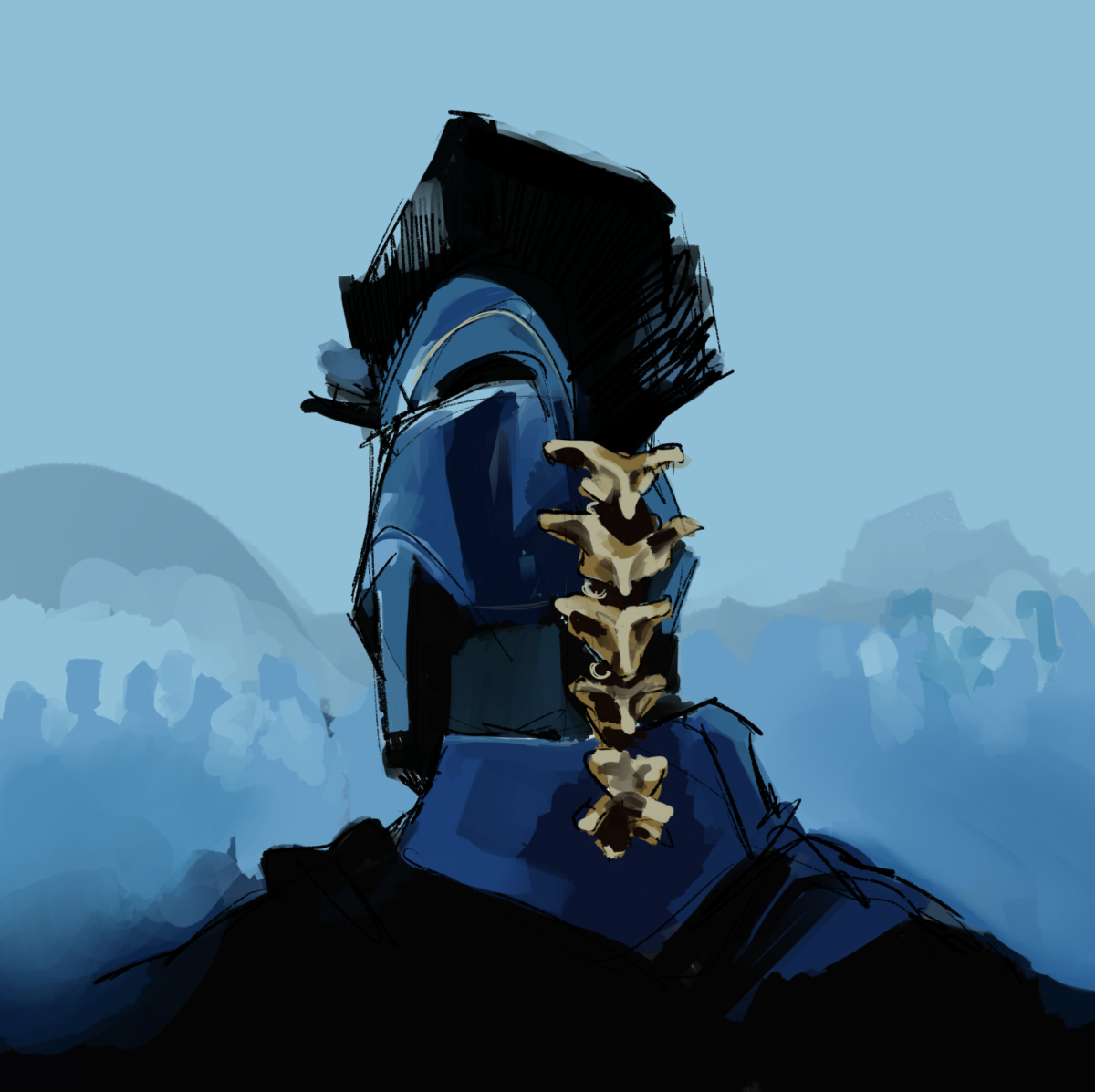
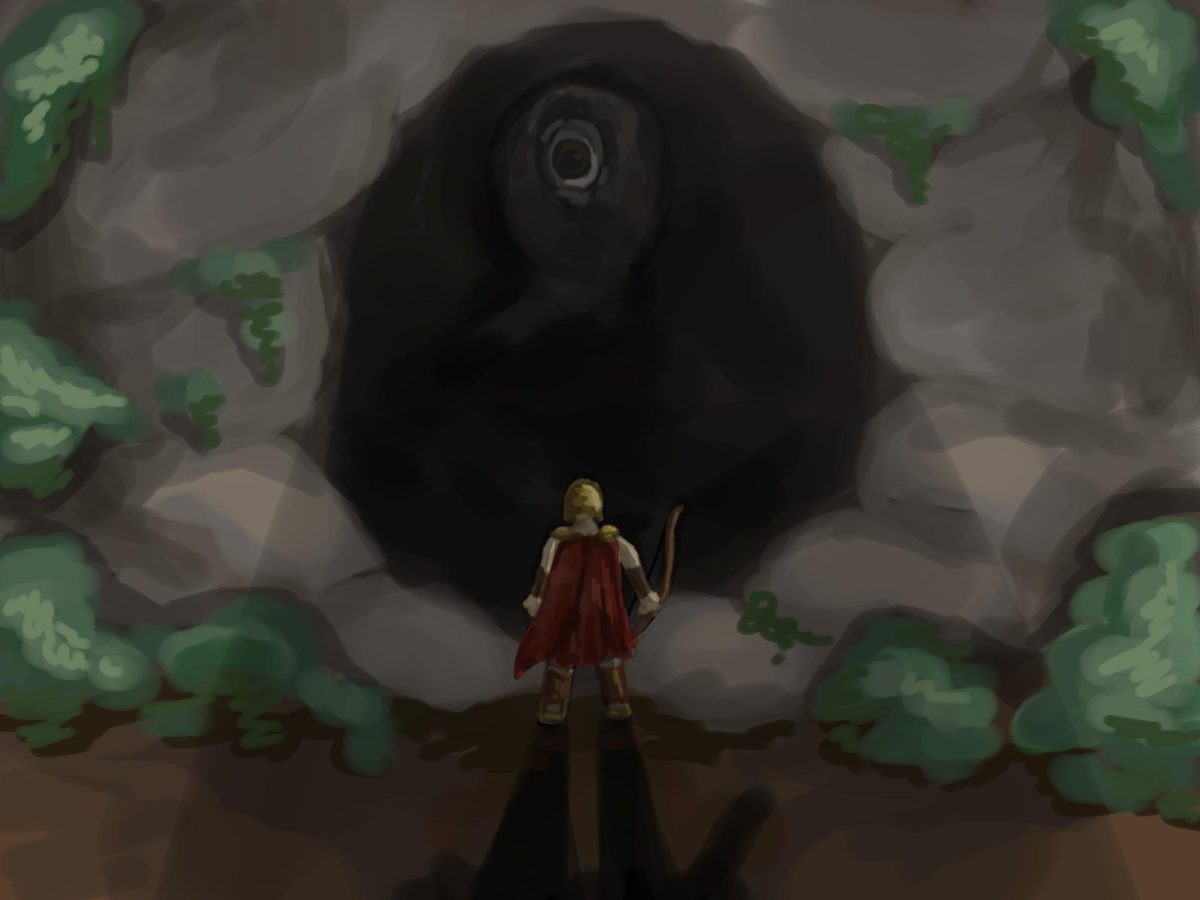
































































The Odyssey swept into theatres this past July, the box office exploding with what is now $1.7 billion grossed. True to Christopher Nolan’s direction, the film is visually and sonically enthralling—and as practical as a Homeric myth can be—with a twenty-foot-tall puppet serving as the cyclops. Ludwig Göransson’s score for the movie was made from reconstructed ancient Greek instruments, scrap metal, and gongs. Odysseus’ journey is depicted as a collection of deeply humanistic struggles– namely trauma, guilt, grief, and the grotesqueness of the mythical figures he encounters. But how faithful can a contemporary two hour and 52 minute retelling be to an Ancient Greek epic?
Nolan’s characters, especially major female stars of the original epic, were especially disappointing for theatre audiences. Emily Wilson, the most recent major translator of The Odyssey, harshly criticized the sanitization of the complex inner lives of Homer’s women in her review of the movie. According to Wilson, Nolan turned Penelope into a woman with “no dreams… [and] nothing to do except yearn for Matt Damon [Odysseus], for reasons unknown.” The only female character with any agency is Circe, from whom Odysseus wins his transformed men back without a hint of a struggle. Helen and Clytemnestra are discussed only tangentially, their whole identities being “a set of all too brief tableaux of female victims (the bereaved mother, the abused wife),” especially in how the film attempts to insinuate Helen’s internal conflicts with her facial scar. Nolan’s Calypso is characterized by her utter lack of action throughout the story, clashing with a Homeric counterpart who is passionate, protests her perceived double standards with male deities, and holds Odysseus captive with her. Instead, Nolan writes Calypso as “an unpaid therapist, soothing the soul of the bedraggled, PTSD-ridden Odysseus with drugs, and graciously listening to his disjointed tale of woe.” Nolan writes women to be astonishingly docile and entirely without any agency, blatantly disregarding the source material— which, in itself, is hardly feminist work.
Emily Wilson’s criticism of The Odyssey runs far deeper than its dramatic butchering of its mythic women. Odysseus himself is sanitized—stripped of his characteristic wit, and made to be a paragon of moral behavior. The famous myth of “Nobody,” Odysseus’ deceivement of the cyclops, is conspicuously absent from the film. Instead of displaying his intelligence through his leadership, Nolan’s Odysseus is “an idealised leader who would never willingly put his people in danger… motivated mostly by anxiety and guilt.” His guilt is heroic—symbolized by the film’s Athena, yet another female character conspicuously stripped of major agency within the film—and as he is haunted by his sack of Troy and the Trojan horse, Odysseus is portrayed to be sympathized with, not as a real character. Even his homecoming is santized—he spares people, and there is no mention of his brutal murder of his female slaves after the murder of the suitors. In essence, Odysseus is “confused… too underdeveloped” along with being shallow and generally unfaithful to his Homeric namesake—thereby earning his namesake as “uncomplicated” in reference to Wilson’s first translated line of The Odyssey: “Tell me about a complicated man.”
Emily Wilson’s review of The Odyssey is rightfully scathing, and clearly articulates the film’s inability to address important themes and characters as well as its empty representation of Homer’s rich epic. Although the film is hardly a testament to Nolan’s writing skills, it serves the admirable purpose of engaging new audiences with Homer’s work, and thus offers a gateway for people without general access to become interested in the source material.