






























































“This is death by a thousand cuts,” said Tara Zuardo, a senior advocate at the Center for Biological Diversity, describing the potential consequences of the federal government’s recent changes to the Endangered Species Act (ESA).
In July, the U.S. Fish and Wildlife Service and the National Oceanic and Atmospheric Administration finalized major changes to the ESA. As of Sept. 14, the regulatory definition of “harm” was rescinded. Already, several environmental groups and tribal nations, such as Earthjustice and the Swinomish Indian Tribal Community, have announced legal action against the Department of the Interior (DOI) in response to these changes.
“We oppose these changes because they have the power to push endangered wildlife closer to extinction,” Kayla Irby said, a communications specialist for Defenders of Wildlife, which is suing the DOI. “The Endangered Species Act has a 99% success rate in protecting species and habitat and is widely viewed as the most important U.S. law for protecting wildlife.”
Since 1981, the ESA regulatory definition of harm has included “significant habitat modification or degradation where it actually kills or injures wildlife by significantly impairing essential behavioral patterns, including breeding, feeding, or sheltering.” Now, this year’s rule has removed that regulatory definition of “harm” without replacing it. Many threatened and endangered species depend on their habitats for survival; thus, the change could lead to drastic consequences for local populations and, in some cases, major impacts for entire ecosystems. “These changes could affect endangered species conservation in several ways,” said Irby. “It could become easier to damage or destroy habitat in ways that harm or kill endangered species, even without directly targeting them.”
“The Endangered Species Act cannot save animals if it protects them only from being directly killed while allowing the places they need to eat, breed, shelter, and survive to be destroyed,” Zuardo said in an interview.
In the California Bay Area, the endangered Delta smelt is one such example of a species facing extinction, said Scott Shaffer, professor at San Jose State University, during a published interview.
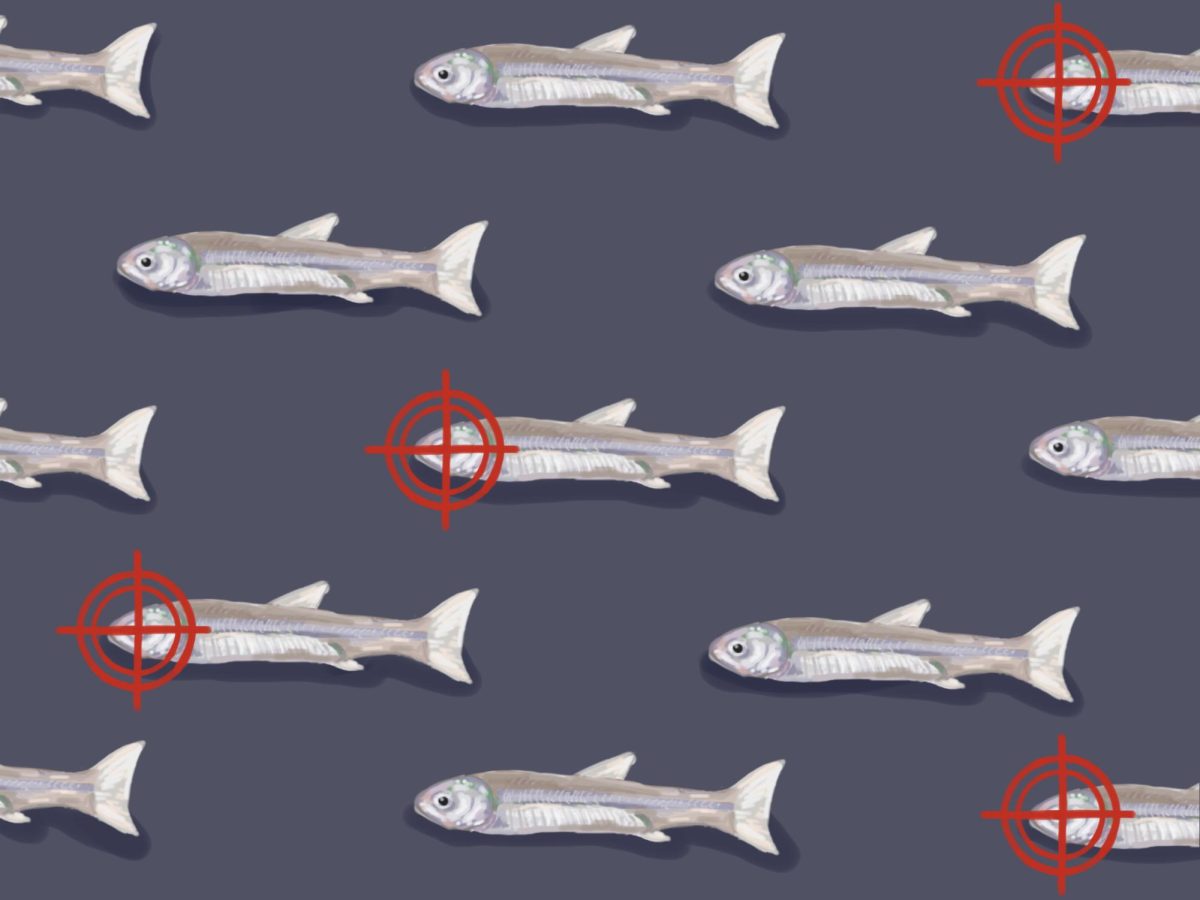
The Delta smelt is a tiny, nearly translucent fish measuring only two to three inches in length and is endemic to the San Francisco Bay-Delta estuary. It is federally listed as a threatened species and as an endangered species by California. Researchers have found that much of its historic habitat is no longer available, with surveys frequently finding no specimen in natural habitats.
“The Delta smelt is not nearly extinct due to overfishing — no one fishes for Delta smelt,” professor Ronald Coleman from Sacramento State University said. “It is near extinction because of the collapse of the ecosystem in which it lives, namely the Delta…That land has been dyked, drained, leveed, farmed, and constructed on.” The Delta smelt’s decline has been linked to the degradation of its historic habitat, eventually leading to massive decline and near extinction.
“Harm to habitat is the No. 1 threat to almost 90% of species listed for protection under the Endangered Species Act,” Zuardo said.
Habitat destruction doesn’t just hurt individual species; it could cascade across an entire ecosystem. “Because ecosystems are interconnected, harming one species can set off a chain reaction affecting many others — including the plants and animals that pollinate crops, support new medicines and keep waterways clean,” Irby said.
The debate over the term harm ultimately ties into a broader argument about the nature of conservation. The ESA was created to protect wildlife before its loss becomes irreversible. Protecting endangered species’ habitats is central to that goal, which calls for vigilance from all Americans.