










































































On election night in America, millions of voters tune in expecting a simple answer to a simple question: who won the most votes? Instead, they get a map. Red and blue states light up as pundits explain why a handful of counties in a few swing states matter more than the rest of the country combined. In a democracy that prides itself on political equality, the presidency is still decided by an 18th-century mechanism that more often than not overrides the will of the people: the Electoral College.
To understand why it still exists today, we have to return to its constitutional origins. The framers of the Constitution were divided over how to select a president. Some favored a direct popular vote while others distrusted normal Americans and wanted Congress to decide. The Electoral College emerged as a compromise. It would, in theory, be a perfect mix of American democratic ideals and elite oversight that would simultaneously preserve the influence of smaller states.
But that compromise had another goal. The structure of the Electoral College was deeply influenced by the existence of slavery in the Southern states. These states, whose large enslaved populations could not vote, still gained political power through the Three-Fifths Compromise, which allowed for their representation in Congress, and therefore their number of electors, to be disproportionately large. Thus the Electoral College was part of a broad system meant to accommodate and protect an unequal society.
Although slavery has long since been abolished, the Electoral College remains. The system violates the democratic principle of “one person, one vote.” A ballot cast in a small state carries more weight than one cast in a large state, and within states, winner-takes-all rules mean that millions of votes are basically discarded. A Republican in California or a Democrat in Texas has little reason to believe that their vote will influence the outcome.
These inequalities are made worse by the system’s focus on swing states. Presidential campaigns concentrate resources, messaging, and candidate visits on a small group of swing states. Voters in states like Pennsylvania, Wisconsin, and Arizona are overwhelmed with attention, while those in safely red or blue states are ignored. Policy platforms, too, are tailored to the interests of these swing-state voters. Agricultural subsidies, manufacturing incentives, and energy policies are designed to appeal to regional economies and gain swing state votes.
Presidents may prioritize policies that deliver tangible benefits to the battleground states their reelection depends on. This creates a feedback loop in which some voters receive disproportionate attention and resources throughout a presidency. Meanwhile, large swaths of the country are ignored.
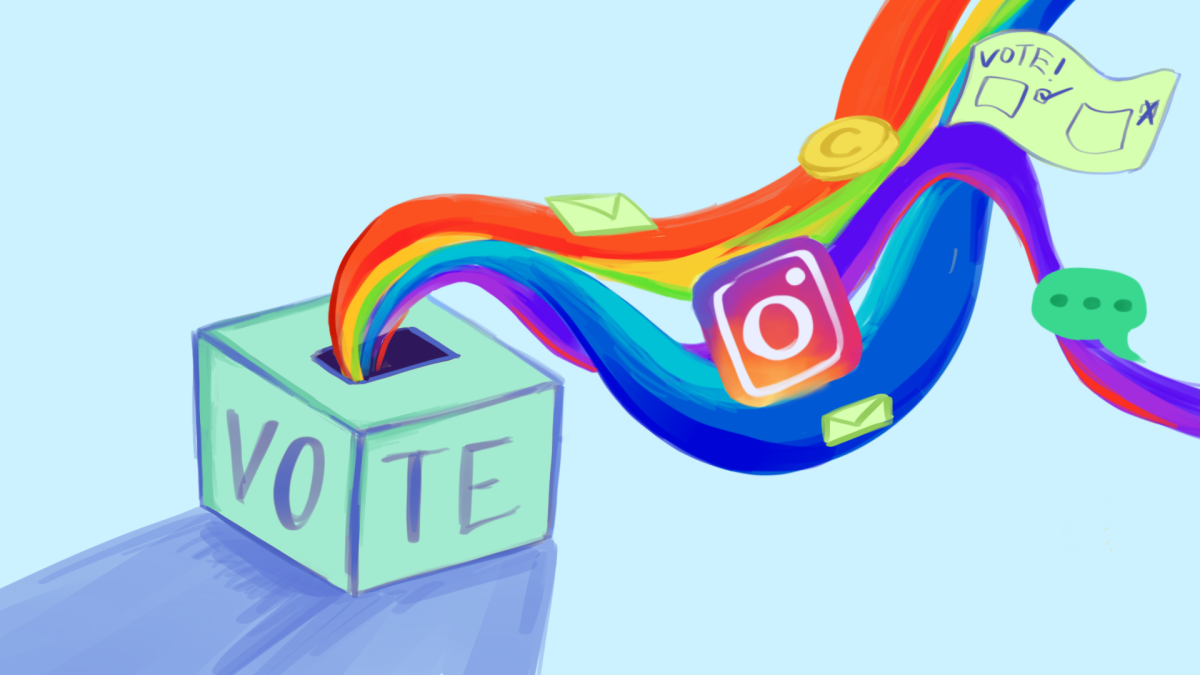
The Electoral College also suppresses voter turnout. When outcomes in most states are pretty much predetermined, many voters feel their votes are meaningless. Is there any point to voting in a state where the result is a foregone conclusion? This sense of futility lowers civic engagement and undermines American democracy.
Third parties fare even worse under this system. Candidates like Ralph Nader and Ross Perot demonstrated that many voters are open to alternatives beyond the two major parties. Yet the winner-takes-all structure of the Electoral College punishes this, as third-party candidates are often seen as “spoilers,” and their supporters are never significantly heard within the system. The result is a political structure that reinforces the same rigid two-party divide Geoge Washington warned against in his famed farewell address.
Defenders of the Electoral College often preach states’ rights and federalism. They argue that the system protects smaller states and ensures that candidates must appeal to a wide range of interests. But in today’s America, political divisions are less about state boundaries and more about differences in industry, culture, and ways of life. The urban-rural divide, for example, exists within states as much as between them. A farmer in California may have more in common with a farmer in Kansas than with a tech worker in San Francisco, yet the current system oppresses these shared interests in favor of state-level outcomes.
Ironically, the kind of “agrarian citizen” that early thinkers like Thomas Jefferson and James Madison sought to protect is not well served by the Electoral College. Farmers located in the number-one grower of produce, California, are silenced by the urban majority. Their votes are diluted rather than elevated. A direct popular vote would not get rid of regional differences overnight, but it would ensure that every individual’s vote mattered the same.
Another common argument is that the Electoral College reflects the framers’ intentions. But the framers themselves could not have anticipated the modern political landscape: universal suffrage, millions of dollars spent, instant communication, and a country of over 330 million people. The Constitution was designed to be amended and adapted. Progress is not a betrayal of founding ideals. I argue it is just what the framers would have wished for.
Abolishing the Electoral College would encourage candidates to build nationwide coalitions. Every vote, in every state, would matter equally. Campaigns would have an incentive to engage with voters across the entire country. Policies would need to appeal to a wider cross-section of Americans.
The United States is vast, diverse, and constantly evolving. Its political institutions should reflect that reality. Replacing the Electoral College would be a crucial step toward a system where every voice is heard, and every vote actually counts.