





























































































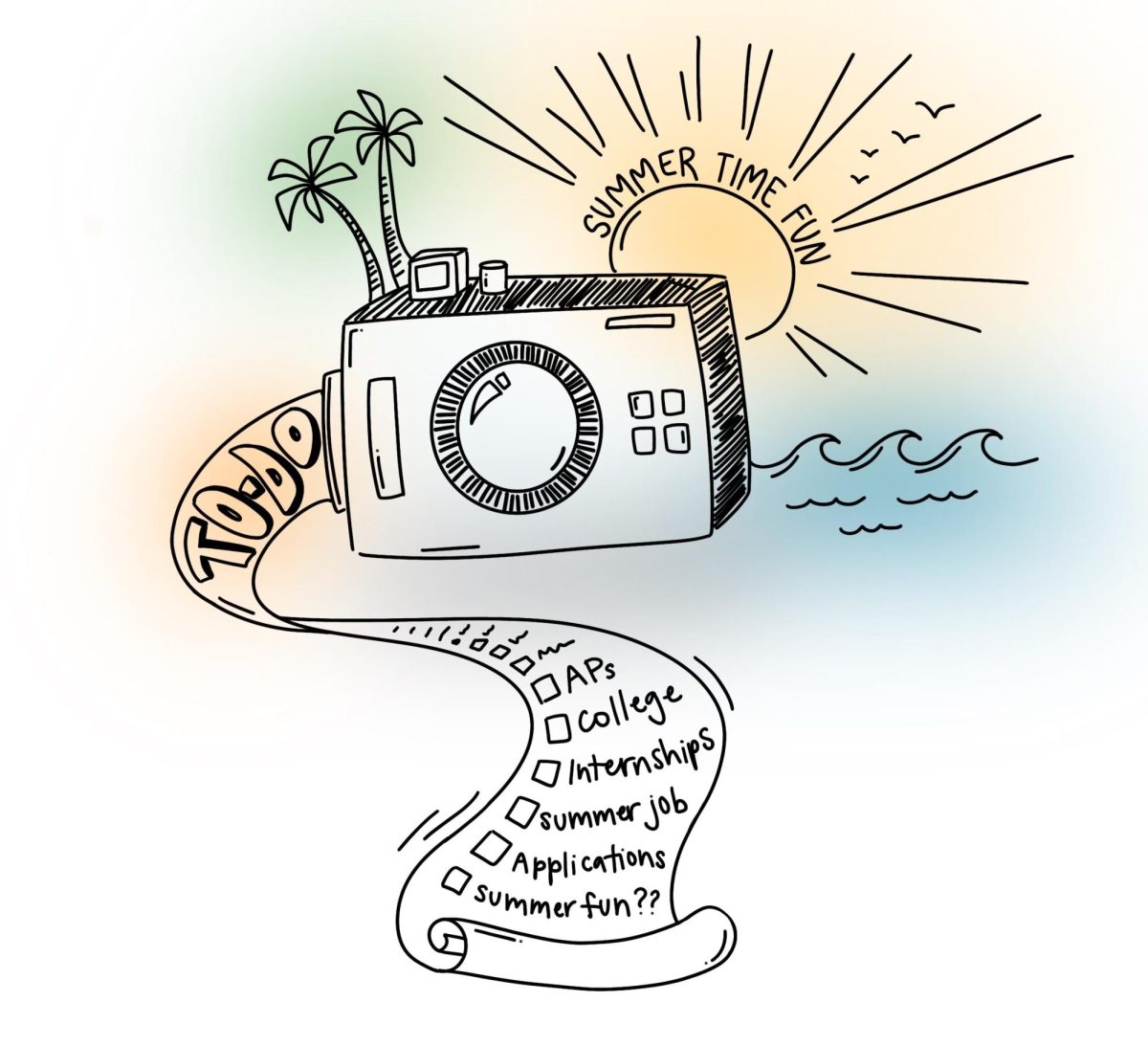
Trying to flourish in high school feels overwhelming and impossible enough on its own. Students attempt to maintain top grades, actively participate in extracurriculars with enthusiasm, and still somehow have a fun social life, but more and more seems to be added to the definition of success that we chase. For instance, despite their intent to provide us with rest and recuperation, summer vacations have become yet another stretch of time that needs to be crammed with scheduled courses and internships. A season designed to repel stress is now seen as a chance to get ahead, and many students are filled with the intense fear that they are falling behind their peers and not doing enough to secure the futures that they seek.
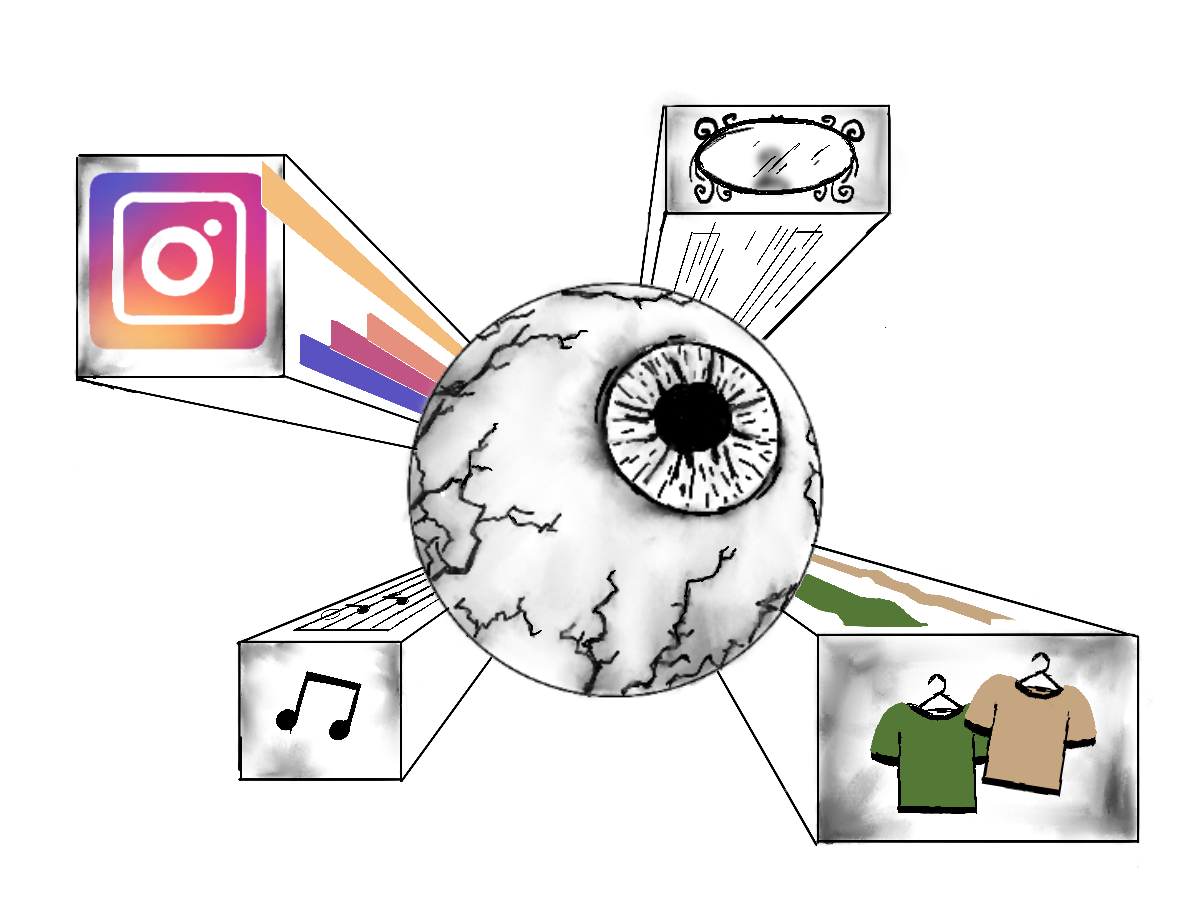
Although these summer opportunities offer numerous benefits and chances for students to explore their interests, they also take away from their chance to discover them without basing identity on achievements. This is the direct result of a global shift toward a much more competitive university system and a new mindset that enforces constant productivity and self-improvement. And that doesn’t even begin to mention the globalized communication that the internet has prompted, allowing everyone to broadcast their successes to communities in vastly different circumstances, leading to unjustified comparisons.
Internships have existed for decades, with apprenticeships being critical in the transition to adulthood. These apprenticeships were originally long-term partnerships that aided in trade mastery, rather than being curated to young novice adults. Later in the twentieth century, internships were primarily designed for college students, allowing them to network for post-grad jobs and put their degrees to use. Then, at the turn of the 21st century, the shift was made for businesses to focus their attention on high school students, empowering earlier exploration of future plans and a clearer idea of what path to take in college.
In a hyper-competitive world influenced by idealized routines and self-improvement challenges, cramming experience after experience to stand out as a more appealing candidate to employers and academic admissions offices alike is deemed a necessary part of life. This rise in the drive to participate in perfectly planned experiences in order to achieve acceptance into top universities has created a market that businesses have jumped at. After all, as interns gain experience, they are better equipped to be employed by companies as effective workers.
Yet, it’s ironic; the goal of self-improvement is to uncover an authentic understanding of yourself, where you are expected to be better and free of all limiting vices. You need to know yourself to be what you are expected to be: the best. Yet, in a world that moves so quickly and demands so much, the quiet contemplation necessary to be introspective seems selfish and lazy. So the increased prevalence of students spending their summers grinding for their future and working themselves to the bone has a complicated array of pros and cons.
Yes, internships and programs are amazing. They offer the chance to meet lifelong friends, develop important skills, network with talented people in the field you want to pursue, and deepen your insights into your own future path. But the opportunities offered for career understanding must be done for the right reasons. Don’t do an internship just to boost your college application; do it because it’s in a field you’re truly interested in. Experience and knowledge of the self is so much more important than an impressive resume. The importance of slowing down and learning who you are, unbridled from academics, athletics, and expectations, cannot be overstated. After all, success and pride in yourself isn’t authentic if it’s gained through external validation alone.