



















































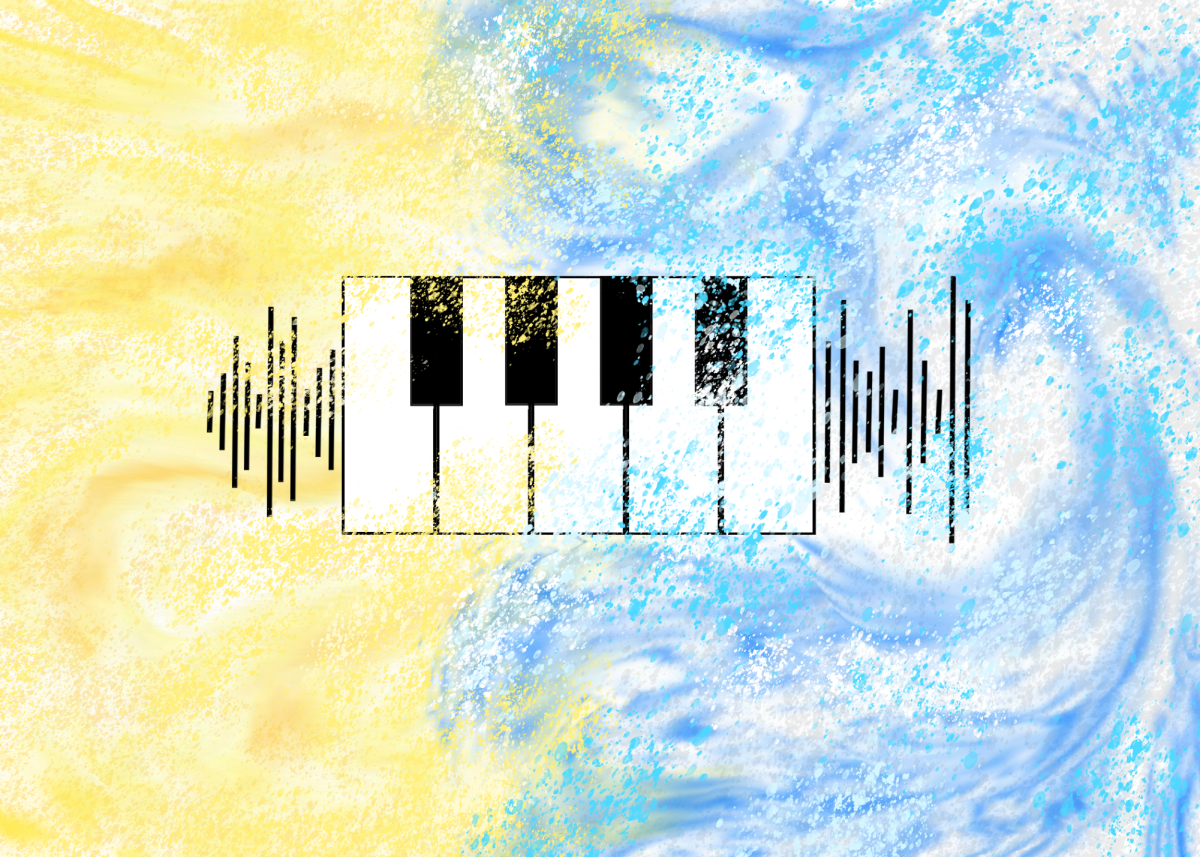
































During the 1960s, pianists Vladimir Horowitz and Arthur Rubinstein both played Chopin’s Ballade No. 1 in G Minor at Carnegie Hall. Despite playing the same piece at the same concert hall, their performances still portrayed different interpretations. Musicians often attribute these mystifying differences to technique, which is referred to as “touch.” For over a century, scientists have wondered whether a pianist can actually change the tone of a piano note through touch alone. Recent research provides evidence that the answer is yes.
A study led by Shinichi Furuya, a researcher from the NeuroPiano Institute and Sony Computer Science Laboratories, investigated the physical movements behind expressive piano playing. Using a new sensing system called HackKey, researchers tracked all 88 piano keys at 1,000 frames per second while twenty famous pianists intentionally created varying sounds, such as bright versus dark and light versus heavy. The listeners, even including people without music training, were able to identify the differences in tone quality.
To understand this event, it is important to understand the concept of timbre. Timbre is the quality of sound that enables humans to distinguish between different voices or instruments, even if they share the same pitch and volume. For instance, a piano and a violin can both play the note C at the same loudness, but each of them have a distinctive sound which sets them apart.
Why does this happen? Although our brains perceive only one pitch, musical instruments actually produce more than one pitch. Alongside fundamental frequency, which is the pitch we hear, a note contains additional, much quieter frequencies called overtones. The combination and volume of these extra frequencies is processed by the brain as an instrument’s timbre.
Overtones are primarily determined by the physical construction of the instrument. For instance, both the piano and violin use vibrating strings to make sound, but they differ in the way the strings are played. In a piano, a hammer strikes a string, while in a violin, a bow is pulled continuously against a string. This difference causes some of the overtone frequencies of the piano to be louder or quieter than those of the violin, making the timbre different. This is not just limited to string instruments; wind instruments create sound by vibration of an air column, and percussion instruments produce sound through striking a flexible surface. For all of these instruments, it is the material, shape, size, and method of producing vibrations that influence the resulting timbre.
Furuya’s research on pianos goes further than this, suggesting that the musician’s technique influences timbre in addition to the instrument itself. Effectively, the musician becomes part of the physics of the instrument. Researchers found several specific, consistent measures of pianists’ movements, such as finger velocity, acceleration, and timing that correlated to differences in perceived timbre. Through surveying listeners of piano performances, the study found evidence that changing such movements allow an audience to actually hear the differences in timbre, even for those not trained in music.
For quite some time, the concept of musical touch has been treated as familiar among pianists, despite skeptics viewing it as a psychological phenomenon. Furuya’s technological innovation has allowed researchers to finally connect those fine physical changes in the musicians’ movements to real changes in sound, not just a trick of the mind.