
















































Sweat rolls down my forehead, the midday sun beating down on me.
“Hey, Coach Angela! Watch this!” a kid yells at me, then immediately proceeds to airball a layup. Surrounded by a group of grinning children, I flash a thumbs-up to him while juggling hula hoops, cones, and a ladder I’ve had since fourth grade.
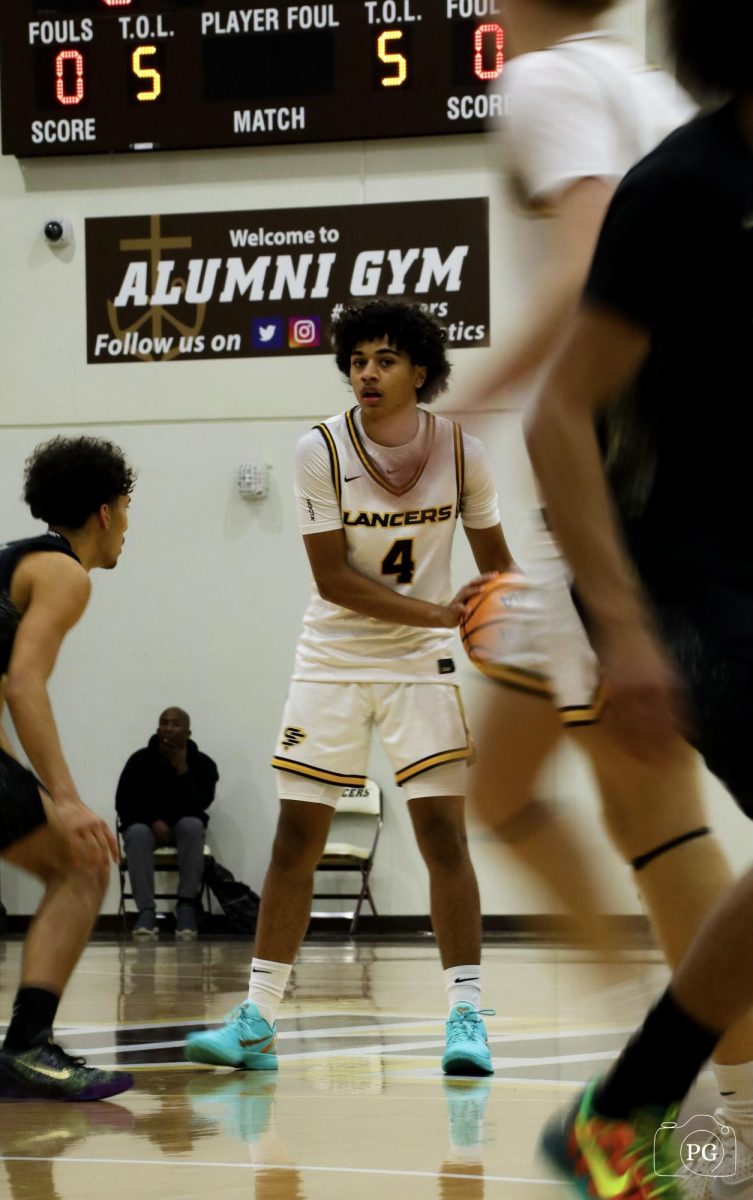
In a flash, I’m in the Alumni Gym again. It’s 8 P.M., my head is spinning, and I can’t feel my legs. We just finished a two-hour practice with weights and film, and I have a Calculus test first period tomorrow.
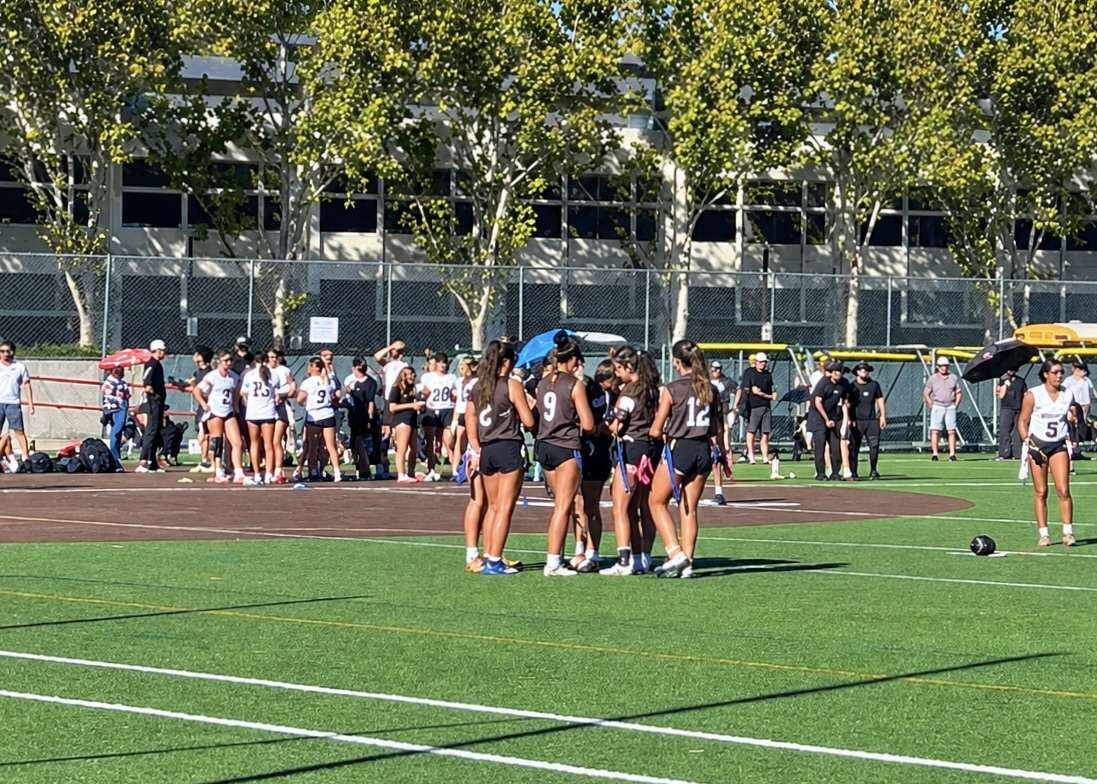
At first glance, coaching young athletes for Silicon Valley Basketball Club’s development program and playing for the Saint Francis varsity girls’ basketball team may seem worlds apart—one filled with chaotic laughter and fun games, the other with late-night training sessions and relentless pressure. But wearing my school jersey as a head coach has taught me a surprising truth about sports psychology: the tools I use to guide first graders are the same ones I must master to stay mentally fit at the high-school level.
To teach a six-year-old how to execute a triple-threat stance, telling her to “just do it,” will only result in confusion. I need to break down the move’s three options—shoot, pass, or dribble—and explain why each matters. I learned that simplifying instructions notably reduces cognitive load, the mental effort required to process new information, which, in turn, prevents the working memory from overloading.
High school athletes frequently fall victim to the same trap under pressure. As soon as a game’s intensity spikes, our brains struggle to process sensory information, leading to overthinking or even mental paralysis. Coaching beginners has taught me to discard the clutter: take things one small step at a time and refocus on a single goal to avoid getting in my head mid-game.
For my players, it’s highly unlikely a missed shot or bad pass will completely ruin their self-confidence. For one, they’re first graders and believe basketball is all fun and games; besides, my job as a coach is to encourage them by telling them, “I love your hard work, you got this.”
Yet, as Saint Francis student-athletes balancing demanding coursework and facing elite WCAL competition, we rarely offer ourselves that same grace. Chasing dreams of playing in college makes it easy to let one poor possession or defensive lapse dictate our internal monologue. However, this negativity shapes the trajectory of not only our own performance, but that of our teammates. If we took more than one moment to have a “next-play mentality,” we could turn lingering irritation into constructive self talk.
The toughest opponent on the court isn’t the one you need to guard—it’s the voice in your head telling you that you’re having a terrible game. Building real resilience means realizing that understanding psychology not only applies for kids, it’s the ultimate tool for dominating your own inner game.
At the end of the day, the number of hours you spend lifting weights or conditioning on the track matters less than your mental toughness—it doesn’t matter if you can bench 150 pounds if you don’t have what it takes to close out a game. Patience, clear communication, and positive reassurance matter just as much as athletic capability. Coaching for SVBC hasn’t just improved my ability to take care of kids—it’s made me a better teammate during water breaks, a calmer student during finals, and a more resilient athlete under unexpected circumstances. The next time you question yourself after a bad pass or a rough grade, take a second to ask yourself, are you your own worst critic, or are you coaching yourself to win?