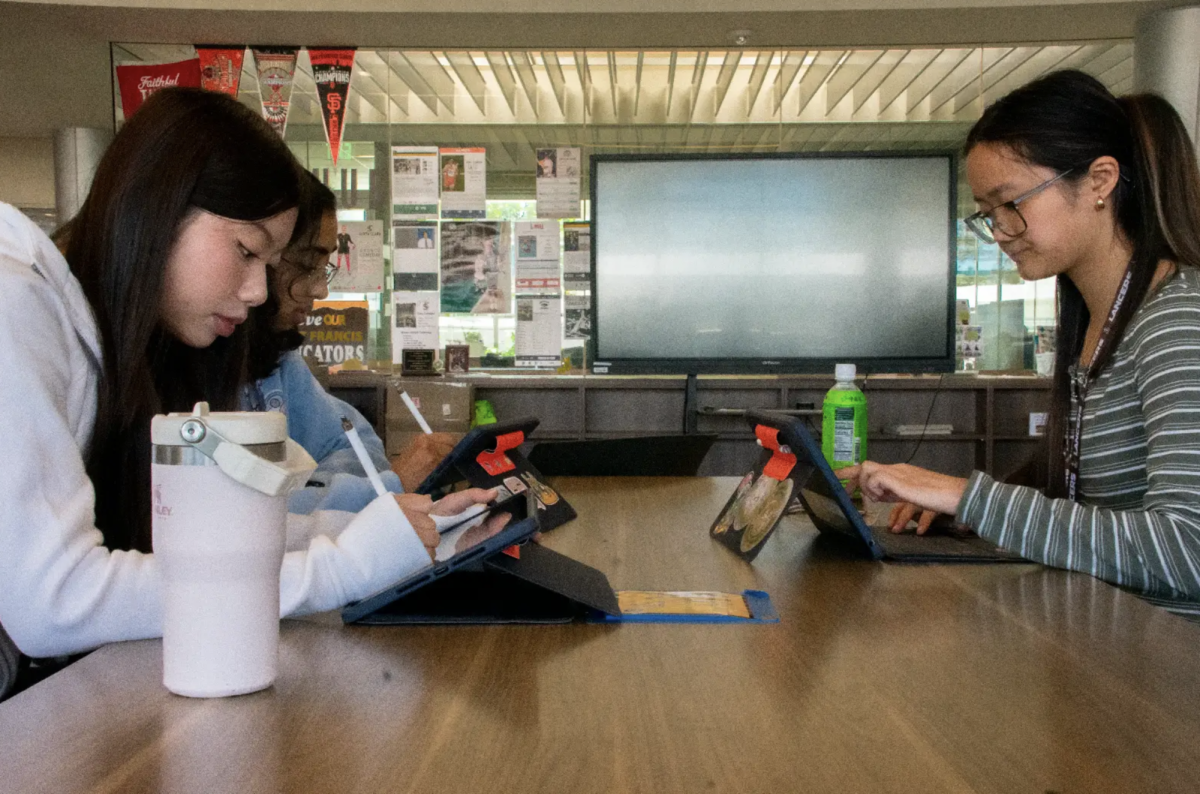
























































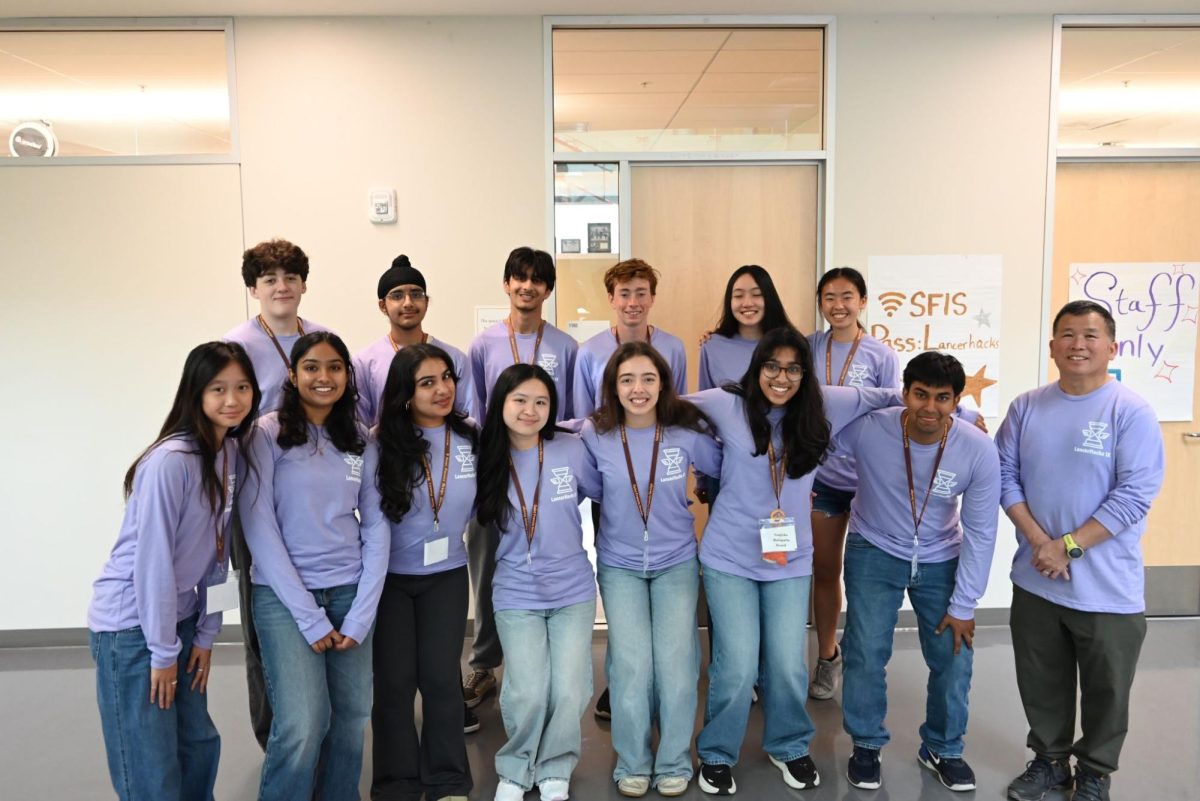
The true test of innovation in this day in age isn’t just knowing how to build something; it’s knowing how to use what you have built to solve a real-world problem, with historical context and the ability to anticipate future growth. During the 12-hour LancerHacks IX hackathon, this exact skill was put to the test, as participants proved that anyone could produce meaningful innovation. The Lancerhacks team saw seventh graders and high school seniors alike home in their skills as they moved past the beginner stage of the competition to tackle complex challenges. Ultimately, they proved that the most important requirement for success is the curiosity to ask the right questions and the persistence to uncover the underlying issues.
A primary goal of the event was to ensure that computer science was accessible to everyone regardless of their prior experience. To support this goal, the team hosted beginner-specific workshops designed to provide the fundamental skills necessary for newcomers to build their confidence alongside their more advanced peers. This environment was further enhanced by the presence of industry leaders. These leaders provided the participants with a unique opportunity to gain authentic insights into the field of computer science through personal experiences and career advice. The opening speaker, Katherine Mavrommati from Mendaera, shared her journey in software engineering and explained the vital distinction between code that functions and code that aims for commercial success and real impact. Her perspective set a high standard for the day because it reminded everyone that the ultimate goal of innovation is to solve real-world problems.
This focus on real-world application continued through a tech panel featuring experts from Meta, Cisco, and Zoetic Motion, which pushed students to rethink their projects by applying professional standards to their own work. This panel also featured a Q&A portion, where students could directly engage with these leaders to ask specific questions about the industry and receive personalized guidance on their own projects. Additionally, a partnership with ElevenLabs provided a unique opportunity for participants to use cutting-edge AI tools. One of the mini competitions specifically rewarded the best use of this technology, which showed students how to integrate advanced AI into their creative workflows to achieve results that would have been impossible just a few years ago.
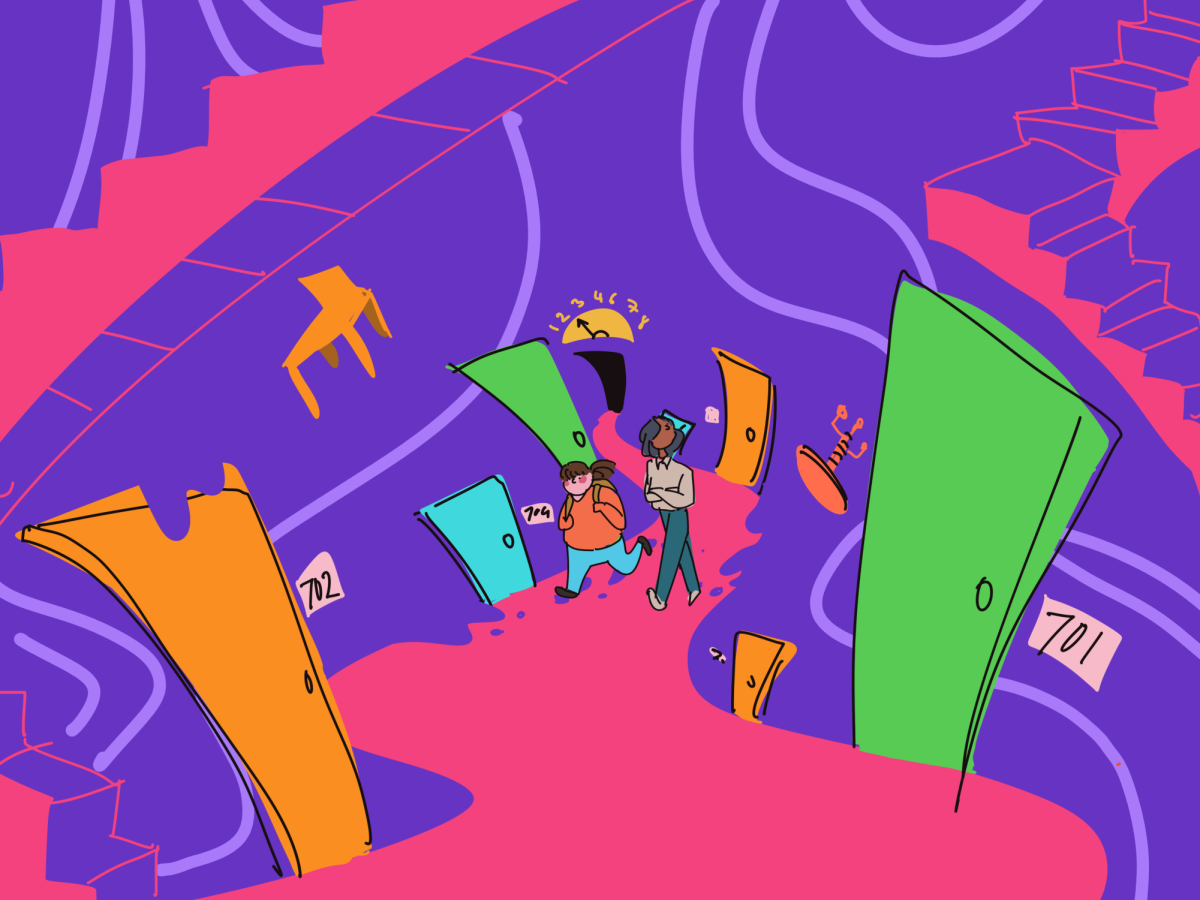
To keep the energy high during the 12-hour event, the team made sure to provide catering for every meal of the day so that students could focus entirely on their projects. The team also integrated several non-technical activities, such as carnival games and random competitions throughout the day. A major highlight were the two different escape rooms the team hosted, which challenged students to use logic and teamwork skills to decode rapid-fire riddles.
The quality of the final submissions truly highlighted this creativity, and while there were many impressive projects, a few stood out for their deep connection to the theme. The overall winner was The Archive, developed by Shruti Dusankar (’28), Saranya Duggirala (’29), and Rishabh Sudharsan (’28). Their platform acts as a living database of culture, using AI and camera-based scanning to connect physical objects to the memories and historical stories tied to them. Another standout project was Aitnemed.AI, an ambient AI companion designed for elderly dementia patients. It uses clinical frameworks and voice cloning to anchor patients to their own life stories in moments of confusion, bridging the gap between clinical support and emotional connection. These are just two examples of the many winners who used technology to tackle complex human issues.
The judging process brought another layer of professional feedback to the event, ensuring that the projects were evaluated on more than just their raw code. The panel of judges, which included industry veterans and former organizers, provided valuable insights by assessing projects based on their viability and how effectively they addressed the historical prompt. While there was over $10,000 in prizes and merchandise available, the atmosphere remained one of collaboration. This feedback was instrumental in determining the award distribution to those who best expressed the core ideas of using the past to innovate for the future.
Ultimately, the success of LancerHacks IX is measured by the way it provided a space for students to experiment with technology in a meaningful context. By the end of the night, it was clear that the participants had gained more than just a list of new coding functions; they had developed a better understanding of how to use innovation to address problems. The event demonstrated that when students are provided with the right resources, tools, lessons, and an area for them to freely express their ideas, they can achieve something truly incredible. This experience serves as a reminder that the most successful innovators of the next generation will be those who recognize that technology is most powerful when it is used to bridge the gap between where we have been and where we are going. The achievements of this year’s participants are truly remarkable, and there is great excitement to see everyone again next year for another chapter of innovation.