





















































One of my biggest fascinations has been the lives of my parents. As a second-generation immigrant, I belong to two very different cultural worlds simultaneously. I’ve visited Taiwan more times than I can count and maintain a close relationship with my relatives there, yet I also live in the US and argue about Barbie movies with my friends. I often wonder what my life would have been like had I grown up in Taiwan. Instead, I live this vision vicariously through the stories of my parents’ childhoods. As both a cornerstone of cultural identity and outlet for parental love in Taiwan, it’s no wonder that food becomes a powerful source for these stories.
Despite both growing up in Taiwan, my father and my mother both lived vastly different lives. They grew up in Chiayi, a small town in southwestern Taiwan, but my father moved to Taipei when he was four years old. Even just a three hour drive separates many of the foods eaten in the two regions.
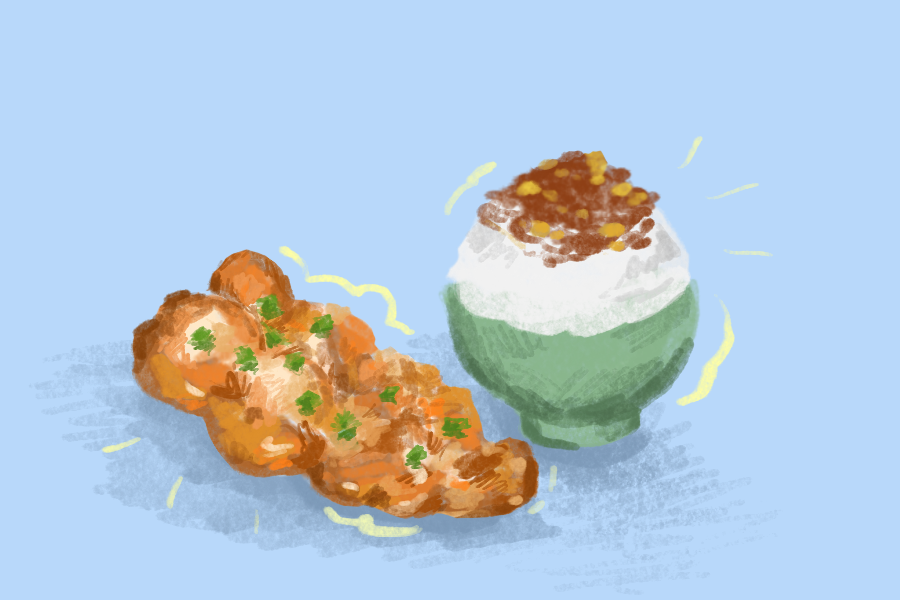
Right from the get-go, their contrasting morning routines as children were evident in their breakfast choices. In elementary and middle school, my father usually went to the bakery downstairs for bread and ate it on the bus ride to school. His go-to bread choice was a Taiwanese braided scallion bread that is popular even today. It’s a soft, savory bread roll with volumes of fragrant scallions tucked into its crevices. On the outside, it appears crispy and glossy, but on the inside, it reveals a fluffy, buttery texture. In high school, he took a bus to school, and often bought his favorite curry fried rice and corn chowder from a street vendor outside his school.
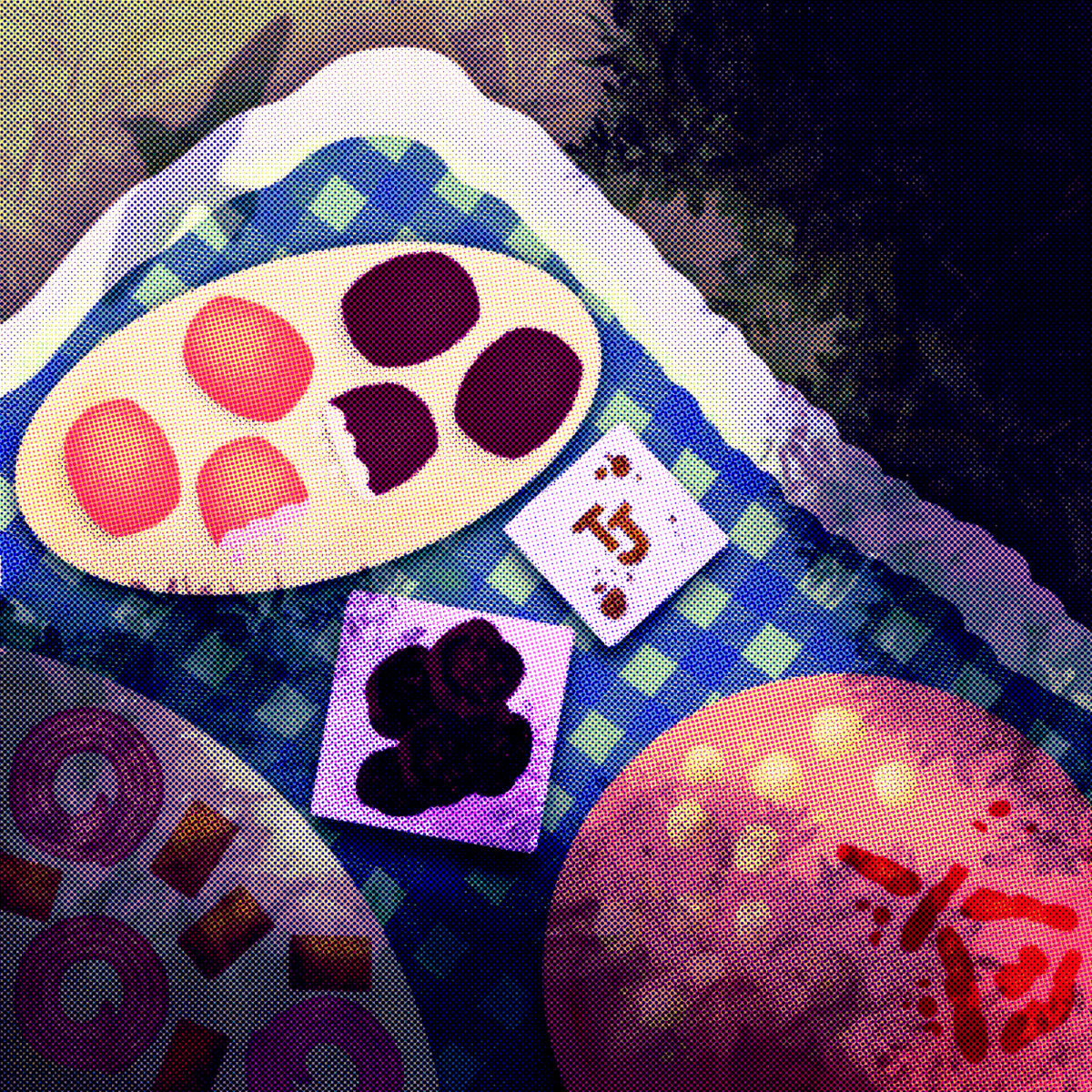
My mother, by contrast, usually had porridge for breakfast before heading to school. Taiwanese porridge is a warm, comforting rice broth and, in my opinion, is best served with a generous amount of meat floss and scallions on top. Her mother often woke up as early as five in the morning to prepare porridge right before my mother and her three siblings left for school at six. On the weekends, they would often go to the street market to eat their favorite turnip cakes at a local street vendor. When it comes to turnip cakes, most people picture Cantonese style turnip cakes common in local dim sums here in the Bay Area, but these visibly differ from the ones made in Chiayi. There, the crispy golden-brown turnip cakes are breakfast dishes, served with savory garlic soy sauce and an egg on top. Popular sides often include soy milk and a warm wonton soup.
Famous for its street food and vibrant night markets, Taiwan has hundreds of snacks and desserts to buy for very affordable prices. In Chiayi, my mother’s favorite Taiwanese dessert was fen yuan, a chewy, boba-like dessert served cold. It can be eaten any time of the year, especially due to Taiwan’s year-round heat and humidity. Her favorite variation of this dessert is fen yuan bing, where fen yuan is mixed with shaved ice. Her connection to fen yuan is deeply tied to a childhood memory. In her neighborhood, a man would always push a cart down the street selling fen yuan. Once, on a particularly sweltering day, her mother went to talk to the vendor, who explained that he sold the dessert every day to earn enough money to send his three children to college. Back then, fen yuan was popular enough to fund both housing and three college tuitions, especially when both were more affordable. This story really moved my mother—she saw that “every step he took was taken with his children in mind,” a mindset she carries into her own life as a mother.
In Taipei, my father often went to convenience stores to buy frozen juice popsicles, especially on more humid days. I recently tried this snack, which we found in the local Taiwanese market here in the Bay Area. It resembles a string of sausages, with the ice stored inside of bendable plastic casings. To eat one, simply rip off one “sausage” and push the middle to squish the ice out. It’s softer than conventional American popsicles, but more firm than slushies, and they often come in different flavors, the mango one being my favorite.
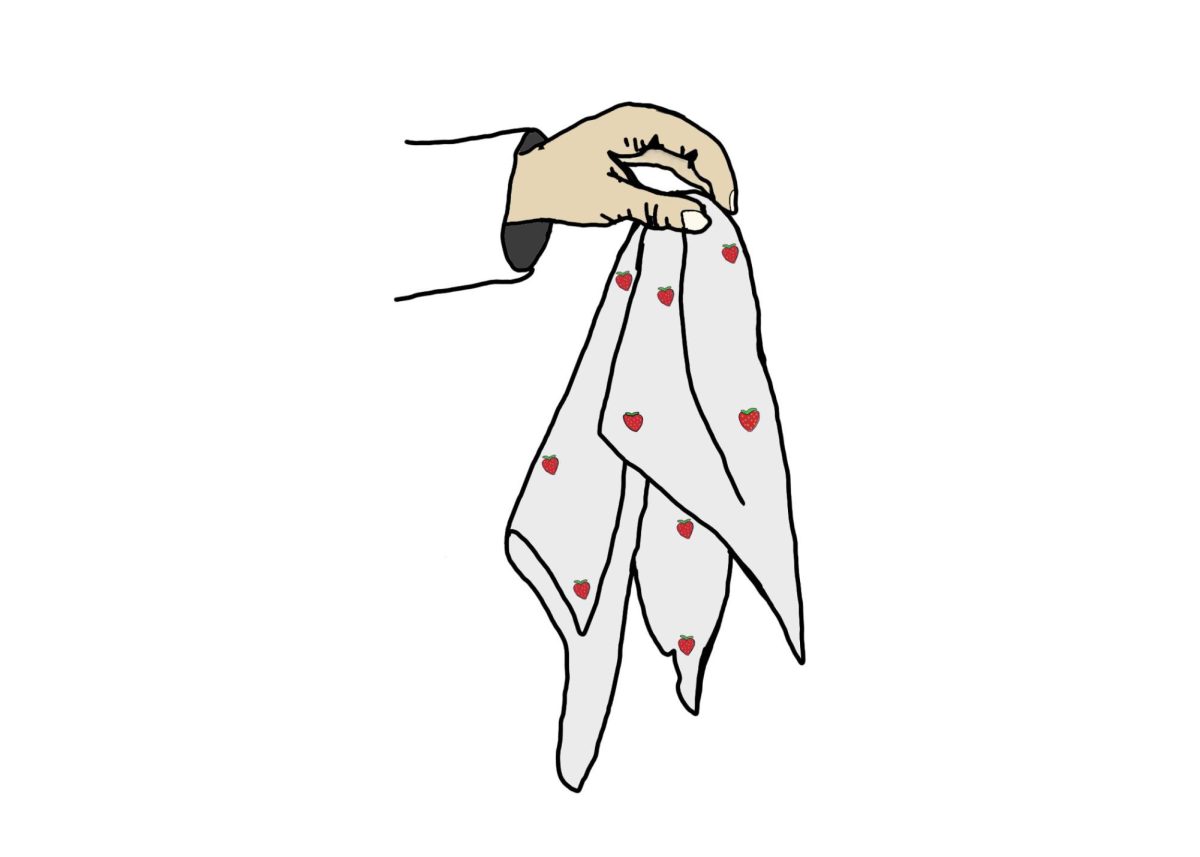
Despite the numerous culinary differences throughout Taiwan, some snacks persist across all regions. One snack in particular, popcorn chicken, is my father’s favorite. For him, this crunchy snack is tied to a core childhood memory. His middle school classroom had windows that faced the sun, so on bright days, the glare would heat up the classroom and make it difficult to see the board. The teacher wanted to install curtains, but the school lacked funding, so they used a low-cost white cloth to block the sun instead. Unfortunately, all the passersby commented that the curtain made the classroom look as if it were hosting a funeral ceremony, and the principal deemed it inappropriate. My father encouraged the class to raise money in the school fair. He had a classmate whose mom sold popcorn chicken and other fried snacks, and they ended up selling hundreds of pieces at the fair at the “exceedingly high” price of ten New Taiwan Dollars. Through this, the class raised over $3000 dollars—more than enough to buy a beautiful, cream-colored curtain.
A common snack that both my mother and my father indulged in was called Kuai Kuai, which translates to “well-behaved.” Kuai Kuai is a popular corn snack particularly known for the superstition that placing green Kuai Kuai packs on top of machines would ensure that they “behave well.” Because of its name, parents would often give their children the snack when they behaved obediently. This snack was also central to my childhood. On road trips, my parents would give my sister and I Kuai Kuai when we behaved nicely, and I now eat it as a comfort food.
After leaving a country they called home and immigrating to the US, my parents recall that they often felt a deep longing for the life they left behind. Nevertheless, local Asian supermarkets in the Bay Area became like a warm hug in their homesickness. My mother could remake her favorite fen yuan every Chinese New Year, and fry turnip cakes for the family, while my father recreated his favorite curry rice. So in every bite of the foods they carried across the ocean, I taste not just where they came from, but everything they gave up so I could belong to somewhere new.