























































































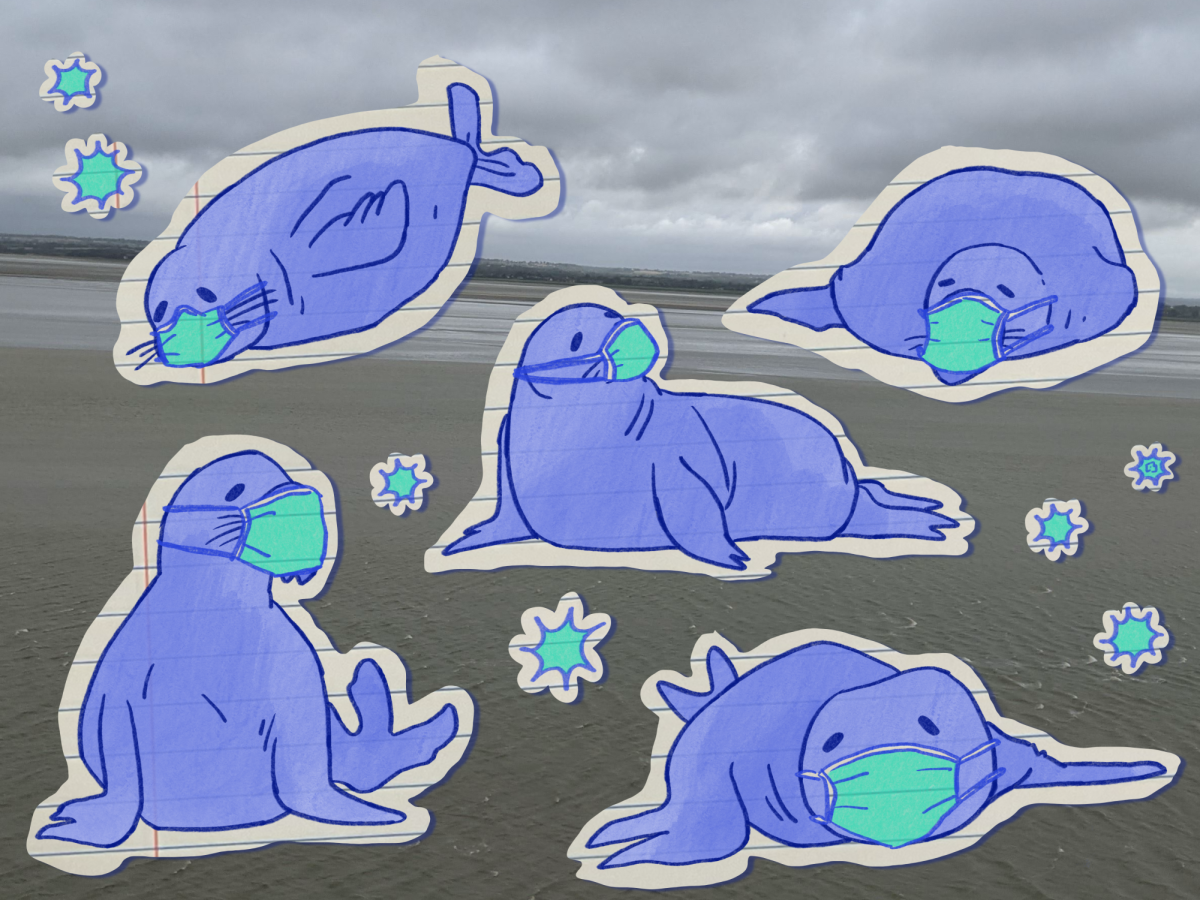
At the end of February, marine biologists and other scientists found that several young Northern Elephant Seals at Año Nuevo State Park had been infected with bird flu, more formally known as highly pathogenic avian influenza or H5N1. In recent years, the world has seen an uptick in bird flu and its rapid spread to new populations, but this particular case is especially concerning. The last time that avian flu was detected in marine mammals was in 2023, when a population of Southern Elephant Seals in Península Valdés, Argentina—which are very closely related to the species in Año Nuevo—faced massive population losses that killed 97% of the seal pups, according to an article by UC Davis writer Kat Kerlin.
Seal observers at Año Nuevo reported the mammals having “abnormal respirations, tremors, and neurological symptoms,” all of which pointed towards an avian flu outbreak. Luckily, despite the infection’s extremely dangerous and highly contagious nature, researchers such as Dr. Christine Johnson from UC Davis and Dr. Roxanna Beltran from UC Santa Cruz believe that the quick detection of the outbreak will prevent it from being as detrimental as Península Valdés’s was. This is furthered by the fact that only 1350 seals were on Año Nuevo’s beach when infections were detected, compared to the usual turnout of 5000 seals—a hopeful indicator of fewer casualties.
Avian flu’s increased spread over the past six years is due to many factors, including numerous links to the changing global climate. Spread by wild aquatic birds, the disease has been brought to new populations—such as the elephant seals in Año Nuevo—because of how warmer temperatures alter the birds’ migratory patterns. Furthermore, rising sea levels cause bird habitats to become much more crowded. Crowding facilitates the spread of disease and pressures birds to build their nests higher from the coastline, “forcing [them] into closer contact with other species,” as reported by Frida Garza and Zoya Teirstein for Planet Detroit.
This phenomenon is yet another piece of evidence of the drastic impacts that climate change has upon marine mammals. Other marine mammals, such as baleen whales, face food scarcity due to increasing temperatures. For elephant seals, a steady ecosystem is vital for their survival and breeding success. Young seal pups cannot swim until they are older, and so they must rely on their mothers to protect them from turbulent water and storms. However, as rough waters and unpredictable tides become more commonplace due to climate change, these vulnerable creatures face more challenges and an increased risk of death. Additionally, elephant seals need cool temperatures to regulate their body heat, and with warmer winters around the world, many mother seals are forced to return to the water early, far before their pups are ready to. This serves as yet another risk factor as young defenseless seals can get caught in turbulent waves. With climate change on the rise, risks like these only increase, leaving the survival of marine mammals like elephant seals uncertain.