









































































At the end of Castro Street, right before the train station, sits Blue Line Pizza, an award-winning Bay Area pizza chain. Coincidentally, the restaurant’s name was actually inspired by a train—the “Blue Line” in Chicago. The name is a nod to the city widely known as the birthplace of deep dish pizza, a heritage that is clearly reflected in the menu. Its creators originated the chain as an offshoot of their San Francisco restaurant, Little Star Pizza.
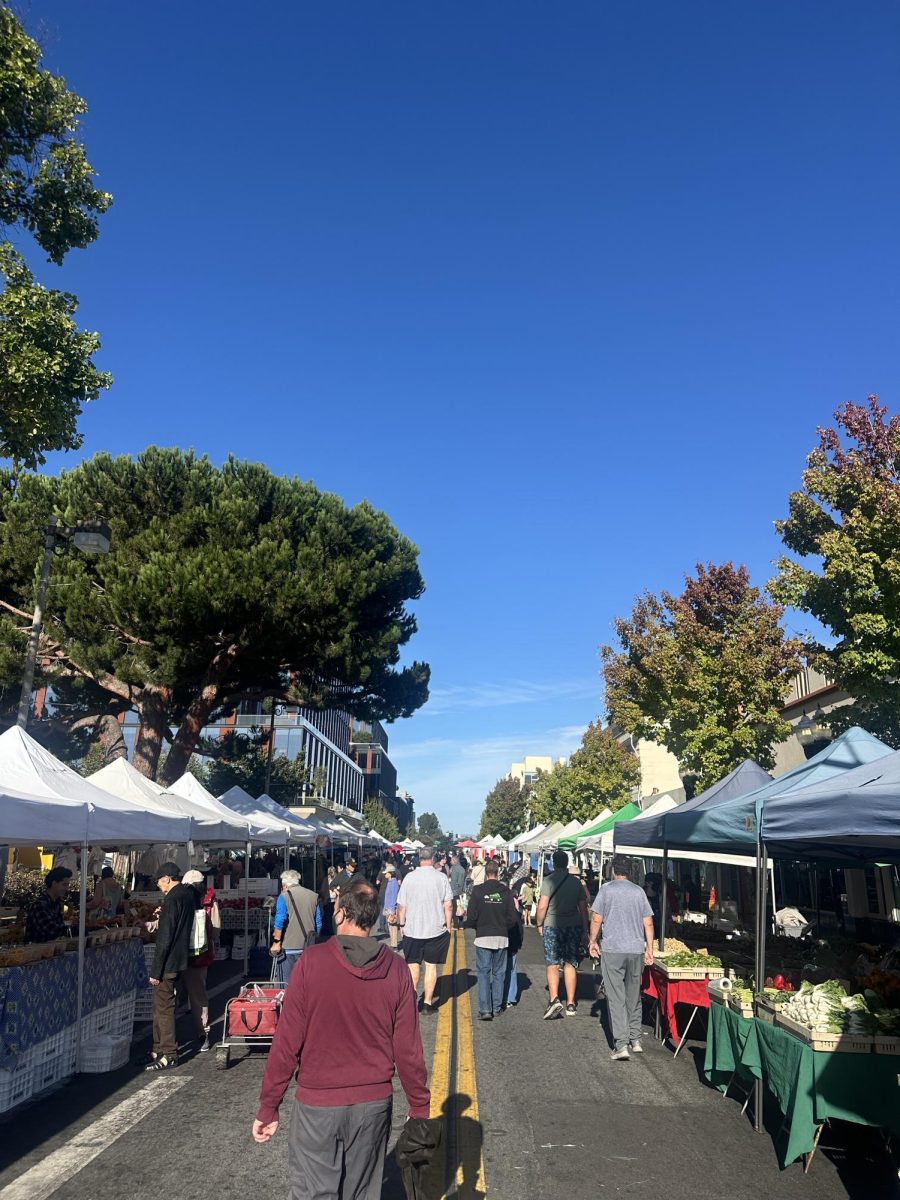
When we visited on a calm Monday afternoon, the restaurant was virtually empty, a stark contrast to the rest of the moderately bustling street. Due to the quiet environment, we decided to sit outside near the neighboring restaurants’ more populated outdoor seating areas. The area was small but cozy, complete with heaters and umbrellas to accommodate for various weather conditions. Inside, the dining area looked dim and a bit stuffy in comparison, so we found the outdoor spot to be a better choice. The afternoon was also made more enjoyable as we were joined by two guests: Caroline Luu (’26) and Alicia Cabrera (’26). Thanks to senior assassin, Sahana arrived wearing her floaties.
After sitting down, the five of us began to peruse the menu, noticing plenty of vegetarian options along with a diverse selection of pizza crust styles: deep dish, thin crust, grandma style, vegan, gluten-free friendly, and cauliflower. There was a “create your own pizza” option, as well as a seasonal flavors menu.
Appetizer:
Blistered Shishitos (8.875/10)
Shishito peppers are a Japanese pepper known for their unique “Russian roulette” characteristic. While most peppers are mild, every once in a while a pepper can be very spicy. Blistered shishitos are a staple in Japanese cuisine, often topped with soy sauce and served as an appetizer.
Tossed with olive oil and sea salt, the oven-roasted shishito peppers were served with a basil aioli dipping sauce and a lemon wedge. The peppers were roasted perfectly and had a great texture. They were well-seasoned on their own; however, their taste was amplified by the rich, creamy aioli and the freshness of the lemon. We all thoroughly enjoyed this appetizer and had no critiques.
Salad:
Spinach and Butternut Squash Salad (7.2/10)
Spinach, roasted butternut squash, goat cheese, dried cranberries, and walnuts have long been staple ingredients in harvest bowls and salads. Often considered a seasonal speciality, these dishes provide all the warm flavors of fall. While it is hard to establish an exact history for such a salad in modern-day cuisine, the origin of butternut squash itself as a primary component of this autumn medley is relatively recent. Although squash has been around for centuries, it wasn’t until the 1940s in Stow, Massachusetts when a man named Charles Legget was experimenting in his garden that he crossed a Gooseneck with an assortment of other squashes. The result was, in Legget’s words, a squash as “smooth as butter, sweet as a nut.” Today, butternut squash, which is often harvested in September, is the most widely grown squash in the United States.
The spinach and butternut squash salad was evenly tossed in Blue Line’s house made citrus vinaigrette. It had a large assortment of toppings and was a delightful precursor to our pizza meal. Despite it being early March, the harvest palate brought the fervent taste of the fall season. The salad itself was undeniably sweet, most likely resulting from the dried cranberries and walnuts, which some liked and others didn’t. Caroline commented on how this sweetness clashed with the acidity of the vinaigrette while Hadley remarked that it was the best spinach salad she had ever eaten. However, many agreed that the squash in particular was quite hard and had little flavor; it was mistakenly identified as both carrot and sweet potato. An important note is that the salad was served with cumbersome tongs that resulted in a show of flying toppings.
Pizzas:
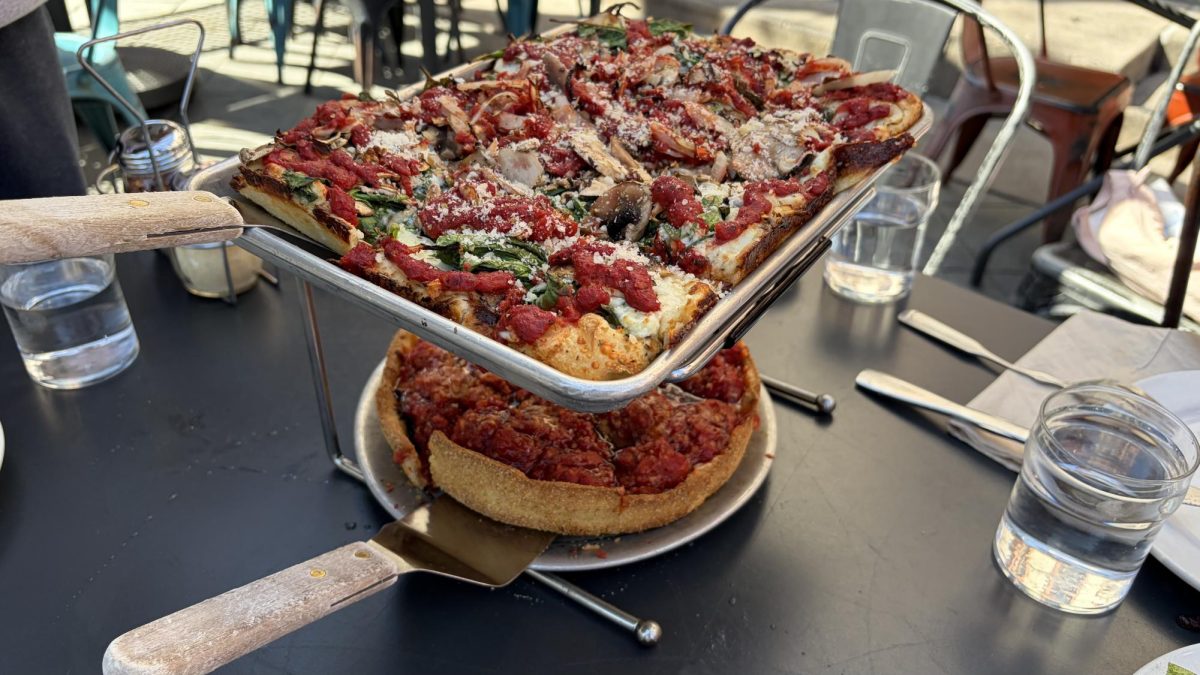
After a twenty minute wait, the pizzas arrived hot and fresh. They were presented with a flourish: the Blue Line pizza on a stand, the Bees and the Bird pizza nestled under.
Modern pizza originated in 18th century Naples, Italy, where street vendors sold flatbreads topped with tomatoes, cheese, and vegetables to the working class. Before this, Ancient Greece and Rome had flatbreads topped with herbs and oil. With increased globalization in the 19th and 20th centuries, styles like Chicago deep-dish and New York style pizza emerged, forming the wide variety that we enjoy today.
Blue Line, Grandma Style (7.7/10)
Grandma style pizza is a thin-crust pizza baked in a square or rectangular pan. It originates from Long Island, New York, where it started to gain popularity, especially in the East Coast. It is named after the Italian grandmas who would make quick pan pizzas at home for their families.
Sharing the restaurant’s name, the Blue Line pizza was topped with spinach, ricotta, feta, mushrooms, onions, garlic, mozzarella, and marinara sauce. While it was tasty, the flavor was pretty mild. Coco did bite into a piece of garlic, but it was unevenly distributed, and no one else noticed a garlicky flavor. We appreciated the generous amount of toppings, which made the pizza on the heavier side. Overall, it was a solid pizza with a good flavor, and we would order it again.
Bees and the Bird, Deep Dish (6.5/10)
The birth of Chicago deep dish pizza can be traced back to the autumn of 1943 to 29 East Ohio Street, the address of Pizzeria Uno’s first restaurant. However, who exactly should be credited with this delicious invention remains unclear. Pizza historians believe that the first deep dish pizza was only an inch tall and made with standard pizza dough consisting of flour, yeast, salt, and water. It wasn’t until the 1950s when a Mississippi cook, Alice Mae Redmond, used ingredients found in Southern-style biscuits, particularly oil, to fortify the dough since she believed the original wasn’t stretchy enough. Deep dish pizza often features a thick, pie-like crust in a cast iron pan with cornmeal dough fortified by either olive oil or butter. Inconsistent with thin crust pizza, deep dish is constructed with cheese on the bottom and then toppings, ending with chunky tomato sauce, in order to ensure that the dough doesn’t get too soggy. This structure also prevents the pizza from getting burned, as the layering serves as a heat shield.
The Bees and the Bird deep dish pizza was topped with roasted chicken, Canadian bacon, caramelized red onions, marinara sauce, mozzarella cheese, and a drizzle of honey. Its clever name, both an idiom and common euphemism, is most likely attributable to the combination of honey and roasted chicken present in the dish. It resembled very traditional Chicago style pizza, with an overload of tomato and mozzarella, which some, due to personal preference, found delicious while others distasteful. The critics were once again divided on the topic of whether the golden crust was too crispy or saved the pizza entirely. The honey provided an undeniable sweetness that Caroline remarked was reminiscent of caramelized bananas. Additional criticisms pointed to a lack of meat and a canned tomato taste. One thing that can be said for certain about this particular dish is the subjectivity of its analysis, although lovers of Chicago-style pizza would most likely find Blue Line’s quite agreeable.
Overall, we found Blue Line Pizza to have strengths and weaknesses that made for a memorable, if not mixed, dining experience.