



















































































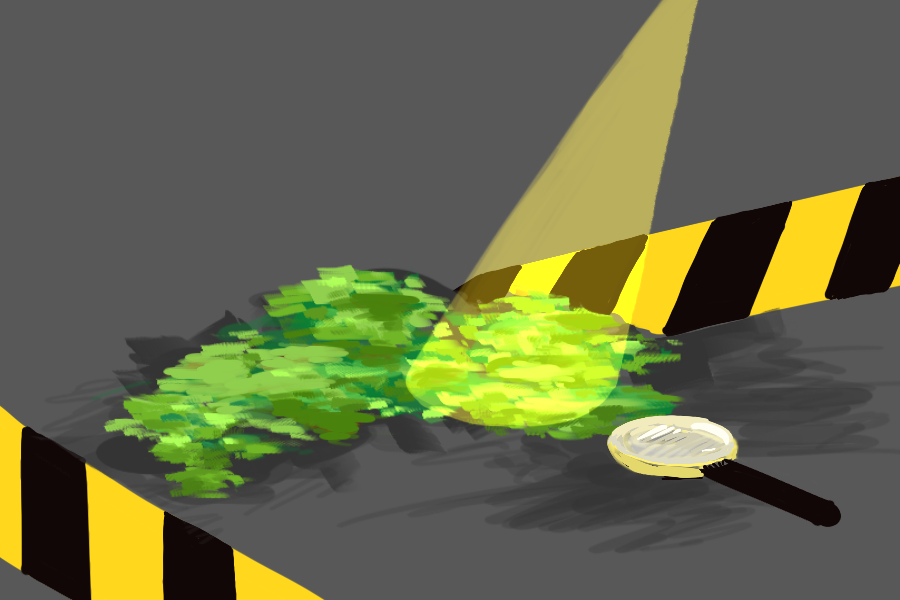
Moss is one of Earth’s oldest and simplest plants. It has evolved to survive in shady and overly moist conditions where maladapted plants would die off. Due to its tenacity, moss is incredibly widespread. Its vast growth and ability to stick to virtually anything make moss an incredibly useful tool for forensic scientists trying to determine timing, location, or circumstances of a crime.
The earliest case of moss being used as evidence was in 1929, when moss growth rates on a decomposing skeleton in Australia helped forensics determine the body’s age. Since then, moss has been used as a legitimate piece of evidence in court.
The first documented case where moss DNA was used in a homicide investigation was in a Finnish murder case in 2001. A man was found dead after previously meeting up with three men in a cafe five kilometers away from where his body was discovered. Investigators collected miniscule samples of moss from the three suspects and their vehicle. They found three species of moss: Brachythecium albicans, Calliergonella lindbergii, and Ceratodon purpureus. These same three species were found at the crime scene. After a thorough DNA analysis, it was found that the moss fragments from the three partners were indeed from the crime scene, linking them to the murder and proving their guilt.
Another notable homicide case in 2013 employed moss as forensic evidence. In the perpetrator’s confession, he only gave the authorities the rough location of where he buried the victim. After analyzing the mosses found on the bottom of the perpetrator’s shoe, investigators were able to identify the species. Utilizing the help of search volunteers and botanists, the investigators were able to identify the microhabitat where the identified mosses were present, narrowing down the search area from seven Michigan counties to fifty square feet. After seeing the new search area, the perpetrator confirmed that it was the burial site of the victim.
Though moss has great forensic potential, there are limitations to its functionality, which can explain why it is not commonly used as evidence. Only 11 official recorded cases have used moss as evidence. Part of the reason is that very few professionals are trained to collect moss samples, preventing moss from being entered as evidence. Furthermore, forensic investigators may not recognize moss fragments or know their potential significance. Tiny moss fragments are particularly difficult to identify and extract, requiring a level of expertise that most forensic investigators do not have timely access to. Additionally, not all species of moss have been completely cataloged. When trying to determine how long ago a person died, moss is sometimes found growing on the body. However, not all species of moss have reliable growth data available, meaning that some species of moss cannot be used to help postmortem interval estimates.
Despite these drawbacks, moss has proven to be an incredibly powerful tool when properly used as forensic evidence. Its tendency to stick to surfaces and its species diversity make it an incredibly useful tool when tying people and places together in an investigation. In order to maximize the potential of moss, forensic scientists and law enforcement officers must collaborate with bryologists (biologists who study the family mosses are from) to ensure its legitimacy.