






























































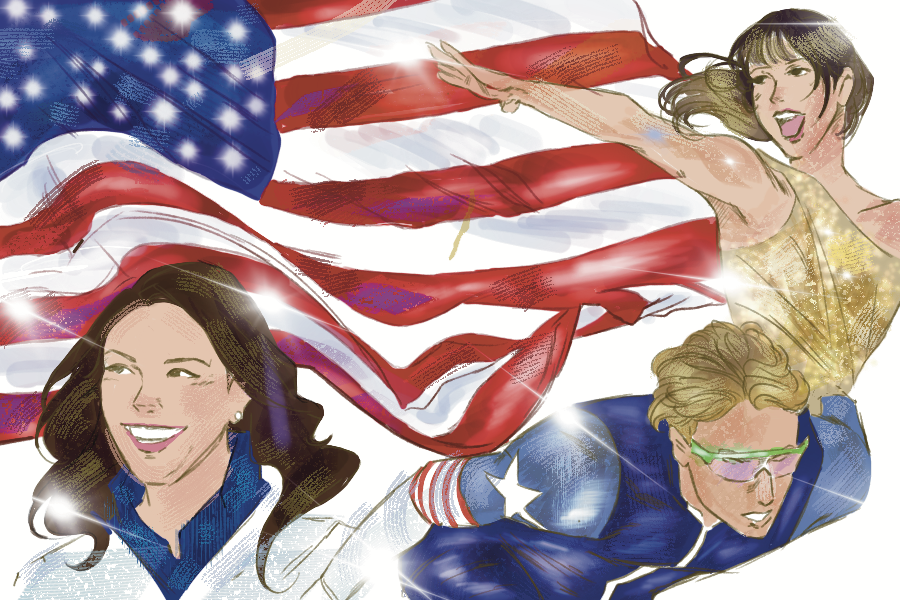












For decades, the Olympic Games have served as a global stage for athletic excellence. That tradition continued at the Winter Olympics this year, as athletes from around the world competed at the highest level of international sport. Yet, beyond the medal count and broken records, the Games also reflect the growing influence of women in winter athletics. From historic moments to incredible performances, female competitors played a defining role in shaping the narrative of the Winter Olympics.
When women were first permitted to compete in the Winter Olympics in 1924, their participation was limited. Women accounted for merely 4.3% of athletes, and were allowed to compete in only a single discipline: figure skating. However, in the last century, women have transformed from a small minority to a central force in the Games. This year, women made up 47% of all athletes, making the Games the most gender-balanced Winter Olympics in history.
This tremendous growth in participation has been accompanied by an expansion in competitive opportunities. This winter’s program included fifty women’s events, as well as 12 mixed-gender events. This further reflects the International Olympics Committee’s desire to approach gender parity. The women’s influence was not solely evident in participation, but also in success. Female athletes were responsible for 67% of Team USA’s gold medals and 51% of the team’s total medals. This achievement further underscores the dominant role of women in our country’s Olympic performance.
While these statistics illustrate the growing influence of women in the Games, the impact of female athletes is perhaps best perceived through the stories of individual competitors themselves.
One of the most inspiring stories of the Games came from American figure skater Alysa Liu. As a teenager, Liu had already established herself as a promising talent in the sport, becoming one of the youngest champions in U.S. Figure Skating history. Yet, at just sixteen- years-old, she stunned the world by announcing her retirement due to burnout and pressures of elite competition. Her comeback, driven by her personal determination, culminated in a defining moment when she secured the Olympic gold medal in the women’s singles Figure Skating short program. Her historic victory marked the first time in over twenty years that an American woman had won an Olympic gold medal in the event. Her win drew attention to the growing conversation surrounding the pressures faced by elite athletes.
Laila Edwards was another female athlete that made history at the Winter Olympics. By joining Team USA, Edwards became the first Black woman to represent the United States on a women’s Olympics ice hockey team, marking a milestone in a sport which has long struggled with diversity due to barriers limiting access for many aspiring athletes. Throughout the competition, Edwards played an essential role, contributing key goals and assists as the team battled its way to a gold medal. By succeeding on one of the world’s most visible sporting stages, Edwards provided an example of what is possible for the young athletes who may have never seen themselves represented in the sport.
Another athlete whose performance captured the attention of the world was Chinese-American freestyle skier Eileen Gu. Competing for China, Gu delivered a dominant performance, winning gold in the Women’s Halfpipe, and silvers in both the Slopestyle and Big Air events. With her sixth medal, Gu became the most decorated Olympic freestyle skier in history, surpassing Canada’s Mikael Kingsbury. Gu’s journey also marked a larger cultural conversation about identity and representation. Born and raised in the United States to a Chinese mother, Gu chose to represent Team China in the Olympics. Nevertheless, Gu was celebrated for her accomplishments by communities in both China and the US. Her story inspires female athletes and individuals from multicultural backgrounds to pursue excellence without feeling forced to choose between different parts of their identity.
Ultimately, the Winter Olympics highlighted that the impact of female athletes extends far beyond medals and statistics. Throughout the Games, a number of impressive women shaped some of the most memorable competition moments. Their achievements reflect the progress being made toward gender equality in sports, as well as the growing opportunities for female athletes across the globe. As participation continues to grow and opportunities expand, the stories of these athletes serve as a reminder that the future of the Olympics will be increasingly defined by the dedication, talent, and excellence of female athletes.