



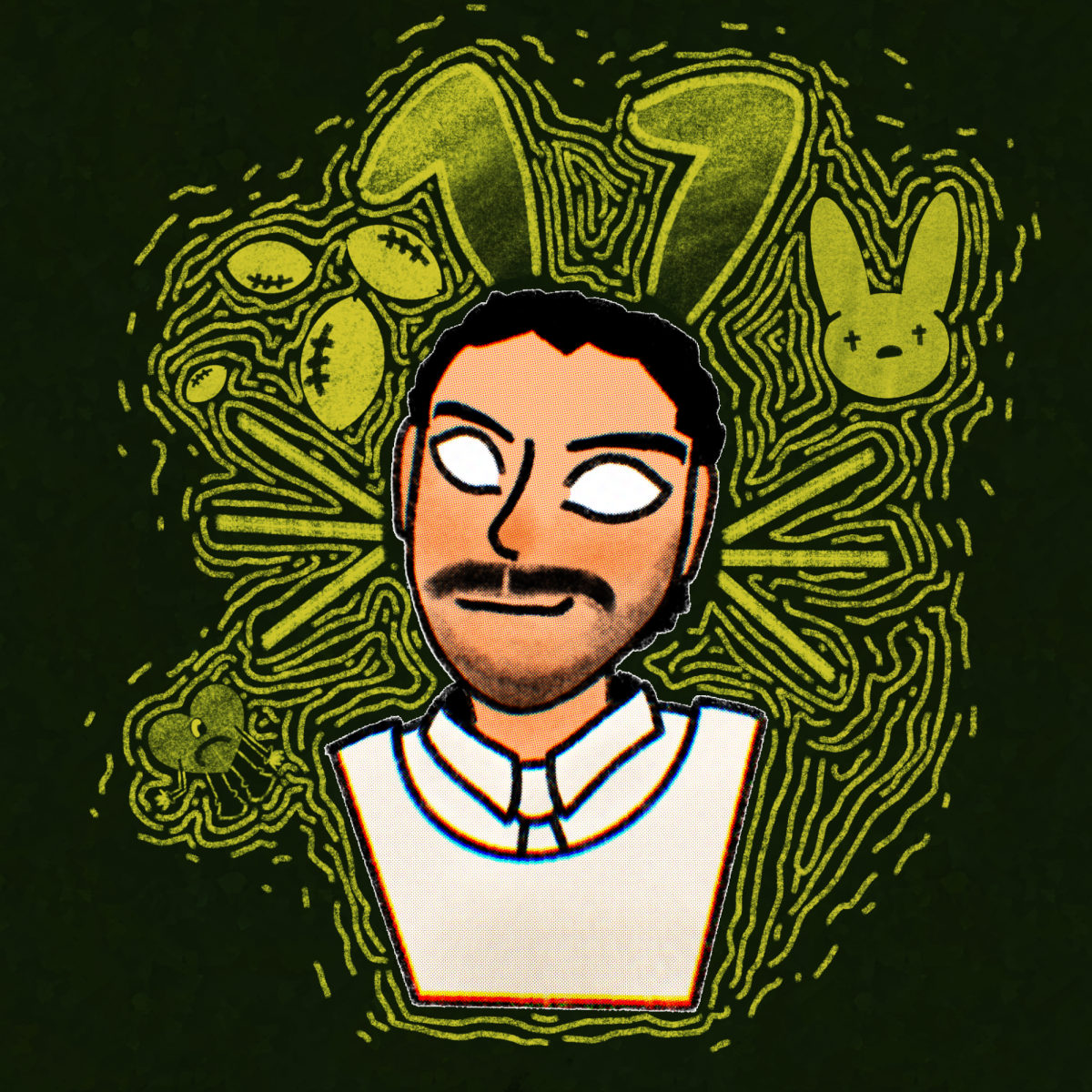























Benito Antonio Martínez Ocasio, known by his stage name Bad Bunny, has made a worldwide impact far greater than some may think. Against all odds, the Puerto Rican singer and rapper has worked his way to global fame. His popularity is at an all time high in the United States despite all of his songs being sung in Spanish, making it all the more impressive that Bad Bunny delivered such a beautiful performance when he headlined on February 8 at the Super Bowl LX halftime show. But how did his journey to the top of the world first start?
In the mid 2010s, Bad Bunny quickly gained popularity in Spanish-speaking countries for his reggaeton music. Reggaeton is a popular music genre which is basically a Latin version of what English speakers consider hip-hop. Most non-Spanish speakers at the time saw him as just another reggaeton artist and thought his music lacked the element of standing out in a crowd.
It was not until the pandemic era that he began to earn recognition not only in Puerto Rico but in the United States as a whole. In 2020, he was named Artist of the Year by Spotify and a couple of years later, he then topped the charts with Un Verano Sin Ti, which debuted and stayed at the top of the Billboard 200 for 13 weeks straight.
While he had already reached global success, Bad Bunny realized his full potential through his latest album from 2025, Debí Tirar Más Fotos, an unmistakable gem and personal favorite of mine. Beloved for returning to his Puerto Rican roots, the album showcases elements of salsa and boleros to an extent much greater than what can be found on his previous albums. Alongside this different style, more heartfelt lyrics can also be found in tracks such as the fan favorites “Dtmf” and “Baile Involidable.”
Bad Bunny earned the acclaim of Album of the Year at this year’s Grammy awards for Debí Tirar Más Fotos to the delight of many and surprise of few, becoming the first artist to win for a record fully in Spanish. His acceptance speech for one of his three awards that night touched the hearts of immigrants all over the United States and beyond with his words “the only thing more powerful than hate is love.”
He carried this message into his unbelievable halftime performance at the Super Bowl in February, where he showcased the beauty that is found in the cultures of Spanish-speaking countries all over the world. His vivid imagery transported audiences to Puerto Rico so that people could see his home the way he does. The recreation of what traditional Puerto Rican life is like surely evoked a feeling of nostalgia, particularly for Hispanic viewers in the stadium and at home.
Bad Bunny has come a long way, something that should not go unnoticed. From the humble beginnings of bagging groceries and uploading his music to SoundCloud as a college student to global stardom and critical acclaim, his climb to the top is truly admirable. He would undoubtedly agree his underestimation by others only fueled his ultimate rise to success. Above all, Bad Bunny should be recognized for staying true to his Puerto Rican roots as he finally reaps the benefits of his decade-long efforts.