
























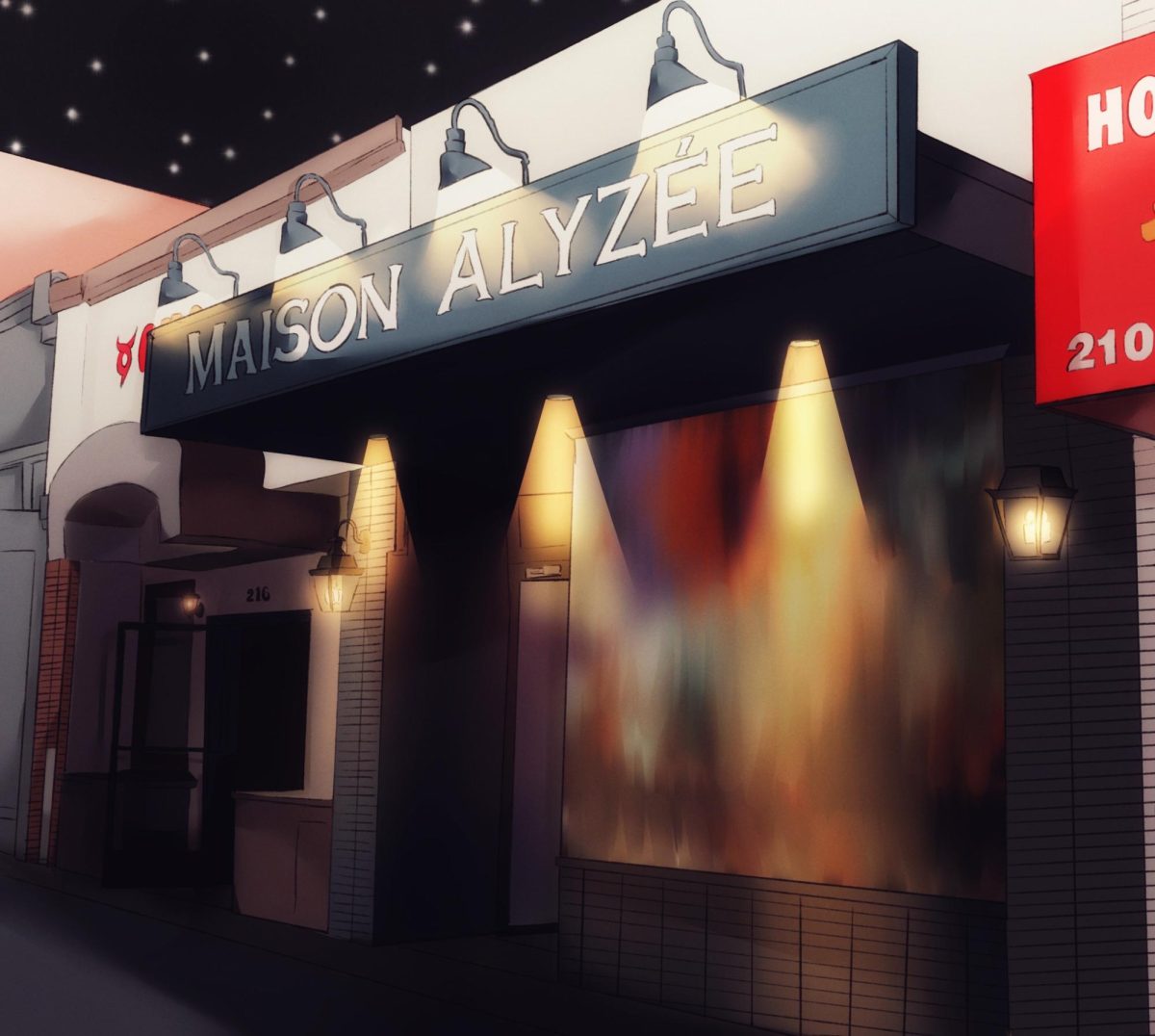























































As a relaxing Saturday afternoon turned into evening, the three of us decided it was the perfect time for us to broaden our horizons, and try something a little new—a patisserie‑café. What better place to try than Maison Alyzée? First opened in 2018 by a Lyon native, the high-end spot has been serving Mountain View downtown with a range of French pastries and baked goods, along with a variety of coffees and teas. Its name—Maison Alyzée—closely translates to House of Alyzée, a not-uncommon naming convention for businesses in French culture. The word maison, which means house, is often used to symbolize craftsmanship, while Alyzée refers to the owner’s daughter, who the patisserie was named after.
With its bright beckoning light, Maison Alyzée has mastered the art of curb appeal, resulting in a steady stream of people lining up, eager to grab an afternoon snack. Sitting down, we noticed a variety of the café commonplaces: readers, chatty groups, parents with children, and of course techbros. Though on the smaller side, it still provided ample seating via wooden chairs and a long booth bench, as well as a large seating space outside. The overall decor skillfully mixed elements from Parisian architecture and modern minimalism, accompanied by its auditory decor of 50s jazz.
As we joined the line to order, we decided to get one of the bread-based items, one sweet pastry, and four macarons. We found it intriguing that none of the items had their price listed, and even more surprising that the staff didn’t seem to know the prices either. Definitely bougie!
Pain Au Chocolat (6.67/10)
The exact origin of pain au chocolat is unclear and highly debated. However, its creation is most often credited not to France but to its neighbor Austria. It is believed that Austrian baker August Zang, owner of the bakery Boulangerie Viennoise, introduced this “chocolate bread” to French society. Pain au chocolat is a member of the Viennoise pastry family which includes the croissant. Although the inventor of pain au chocolat has never been verified, people credit Zang as he also sold the schokoladencroissant which the precursor to the chocolatine, as the people of the southwest region of France call it, the name derived from schokoladen. Nevertheless, pain au chocolat is enjoyed by many today thanks to its widespread popularity in French culture.
Upon arriving at our table we noticed that the seats and countertop were littered with flakes of pastry. While we didn’t realize it then, this was foreshadowing of things to come. The large pain au chocolat had many light, distinguishable layers resembling the rings of a tree, inevitably resulting in crumbs accumulating on the table. Despite sitting on display for a considerable amount of time, we were disappointed that the pain au chocolat was not warmed up before being served. The chocolate to pastry ratio was unsatisfactory as there was only a little bit of chocolate stuck together at the bottom. While we agreed that it was enjoyable, there was nothing special about this particular bakery’s pain au chocolat and it was not worth the $6.25 spent.
Matcha Raspberry Cake (8.5/10)
French patisseries sell a variety of pastries such as tarts, éclairs, macarons, and individual cakes. Maison Alyzée’s Matcha Raspberry cake is one of its signature individual cakes, which are known for their beautiful presentation and harmonious blend of bold flavors.
This is a dish which you can taste long before you even grab your spoon. The cake is beautifully constructed with a spongy forest green cake as its foundation, and whipped white chocolate and matcha ganache to top it off. It was hard to imagine that hidden inside were also layers of coulis raspberry and mascarpone cream with Tahiti vanilla. Individually, the raspberry and matcha were quite strong flavors, yet when paired together in this cake, they blended into this soft taste that was new to us. Overall, with its many textures and flavors—spongy moist matcha cake, fresh jammy raspberry, fluffy mascarpone cream—this was the dish that kept on giving.
Macarons:
Macarons, widely associated with France, are actually thought to have originated in Italy during the eigth century. Legend says that these sweet bite-sized sandwich delights were introduced to France by a chef when Queen Catherine de’Medici of Italy married King Henry II of France in 1533. Back then, macarons were also called “priests’ bellybuttons” because of their round shapes!
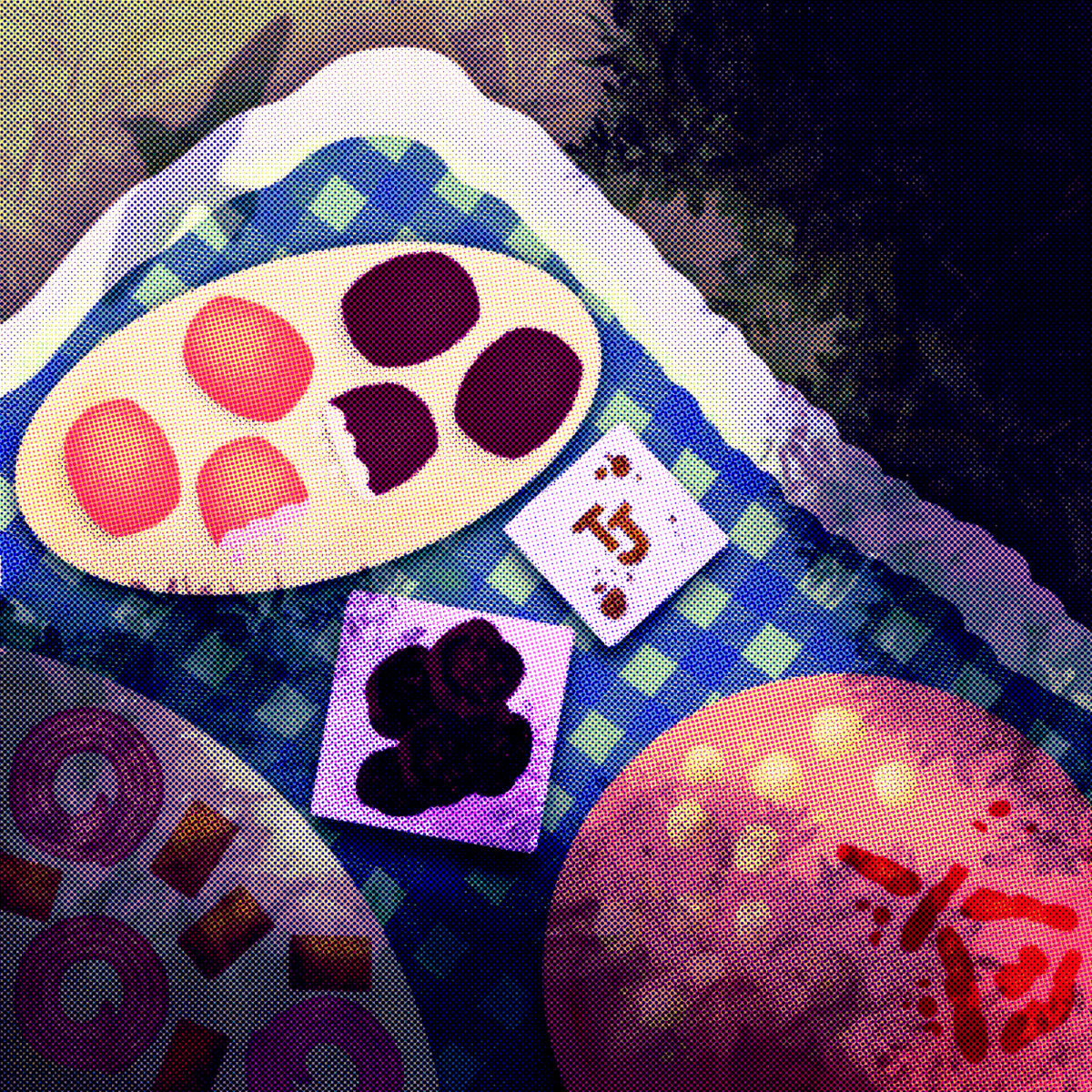
Out of the seven flavors available, we decided to try four: pistachio, lavender, vanilla, and raspberry. Four macarons cost $12, making them some of the more affordable treats available.
Pistachio (6.3/10)
The pistachio macaron was an artificial shade of nuclear green and had a very light flavor. While we all had expected it to be the best, we were disappointed with its low flavor profile.
Lavender (7.5/10)
The lavender macaron had a good amount of lavender flavoring—it was not overpowering or too subtle. The light cream combined with the light shell made this our overall favorite of the four.
Vanilla (6.5/10)
The vanilla macaron was perfectly mediocre. We all noted that it was harder than the others and more difficult to enjoy.
Raspberry (5.3/10)
Too sweet and too strong, the raspberry macaron really let us down. Honestly, it tasted like strawberry toothpaste and left a weird aftertaste in our mouths.
Overall, we were incredibly impressed by Maison Alyzee’s signature desserts appeasing to the eyes and boasting delectable flavors. Beautifully crafted and equally delicious, we would recommend these pastries to anyone looking for an authentic taste of Parisian cuisine. While the macarons and breads were pleasant, they were quite ordinary, leading us to question whether they were worth the upscale pricing. Nevertheless, it’s hard to imagine anything better than satisfying both the body and the soul in good company.