










































































We have all heard at least one teacher, if not all, end their assignment description with, “And please do not use ChatGPT for this,” followed by the inescapable comment from the class clown, “Well then, I’ll use Gemini!” While we treat this as a running joke, we must understand what that unavoidable closing remark robs us all of. Admittedly, teachers have a valid concern as they want to make sure students are actually spending the time to think and try to figure things out on their own, rather than letting artificial intelligence (AI) do it. However, students have already embraced AI and consider it just as essential as their computer or calculator in classrooms. The key solution in this case lies in balance. Simple assignments that emphasize core concepts can be completed without AI, but any real-world complex assignment should encourage students to use AI to enhance their learning and help them adapt to a future full of AI. AI use should be promoted in classrooms and taught instead of being shunned and ignored as if it is a criminal offense to use it.
This resistance to technology is a direct reflection of how the modern American school structure was finalized in the Committee of Ten in 1892. The last major federal shift, the No Child Left Behind Act in 2001, while beneficial toward the education of a large number of students, only doubled down on testing without changing the fundamental issue. Since then, the professional world has moved on from the times of paper ledgers to the age of the internet, and now has entered the era of AI. The gap of knowledge that has to be filled by students entering the workforce is growing, and no one is informing them of this issue until it is too late. LinkedIn’s 2025 Work Change Report notes that 70% of the skills used in most jobs are expected to change by 2030 due to AI integration. If a worker from the 1920s walked into a modern office building, they would be lost, but placed inside today’s classrooms, they would see their childhood. This is a problem that must be solved!
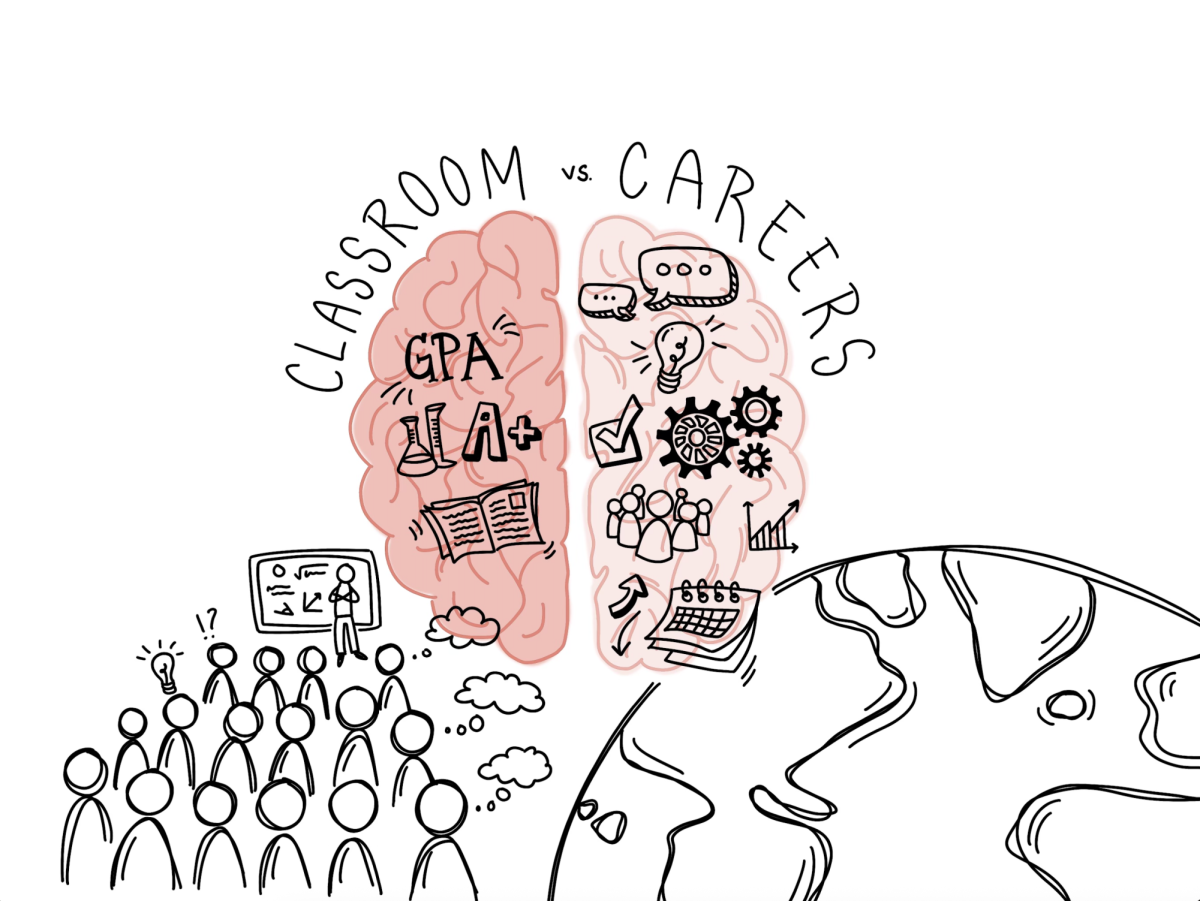
One reason this problem persists is that the current goals for our school system are centered on filling the checkboxes of course requirements rather than providing a meaningful education that prepares students for the future. Administrators often focus on the immense challenge of meeting strict state and federal guidelines, which can unintentionally leave little room for experiential and meaningful opportunities that both educators and students value most. This makes students develop a deeply ingrained disdain toward learning, as they see schooling as a fountainhead of useless and dull information.
Ultimately, we must ask; why is the system set up the way it currently is? The answer lies in the complexity of changing the education system. It is far easier to manage standardized testing than to overhaul the curriculum and grading processes on a large scale. This is why traditional metrics are now in crisis, AI can easily bypass them. A 2025 UNESCO report on assessments highlights that because AI can now replicate formulaic responses, schools must shift from measuring raw knowledge to evaluating higher-order thinking. However, this translation is slowed by macro factors like government standards and the time it takes to adapt the curriculum and technology to be more relevant to today’s society.
Instead, schools should build the life skills that students will need to succeed in this emerging AI world. The Sutton Trust’s Life Lessons report found that 96% of teachers believe life skills are as important as or even more important than formal academic qualifications for a student’s success. What would be more beneficial to spend your tax money on: teaching a student the structure of an anaphora that they will most likely forget before finishing high school, or teaching them how to file taxes, a skill that they will use for the rest of their life? Schools’ goals should be to empower students to gain knowledge in areas of interest and to succeed in adulthood.
So, how does AI fit into this? When you prepare a student for the future, you want to provide them with the same environment they will operate in. AI is a necessity for future careers, as students who do not use it are much less efficient. A Harvard study states that workers using generative AI are 33% more productive for every hour they use technology than those without. Instead of spending time teaching kids coding syntax and technical jargon that is now outsourced to AI, classroom learning should be focused on creative thinking. Students should learn how to solve problems through work that can never be done by AI. Education must shift from a 19th-century compliance model to a modern, student-first empowerment model. This would allow students to interact with their passions and interests through technology, and allow them to bridge the intelligence gap during their formative teenage years.
Now, how should these changes be integrated? Instead of a separate “AI class,” AI should be embedded in all classes. Students should also be encouraged by their teachers to use AI as a personal tutor or study tool. For example, in an English Language Arts course, rather than banning the use of the tool, students could use it to generate counterarguments for their essays, forcing them to think more critically about their positions on situations. AI should be used less as a cheat code and more as a copilot for their work, much like how it would be used in their future careers.