









































































For decades, engineers have struggled with a single problem: figuring out a way to filter tiny particles from water without the filter clogging. Typical designs use fine meshes that trap debris, but eventually stop working. However, in nature, this problem was solved almost millions of years ago. Each day, fish filter significant amounts of water without their filters breaking, clogging, or slowing down. Now, scientists are utilizing that design to take on one of today’s most challenging problems: plastic pollution.
Microplastics are miniscule plastic fibers which are sometimes shed when clothing is washed. With every laundry load, thousands of fibers escape into wastewater. Throughout a single year, the average home can release hundreds of grams of microplastics, roughly amounting to the weight of a soccer ball. Since these fibers are so tiny, many wastewater treatment plants cannot capture all of them. As a result, these particles tend to accumulate in bodies of water and organisms.
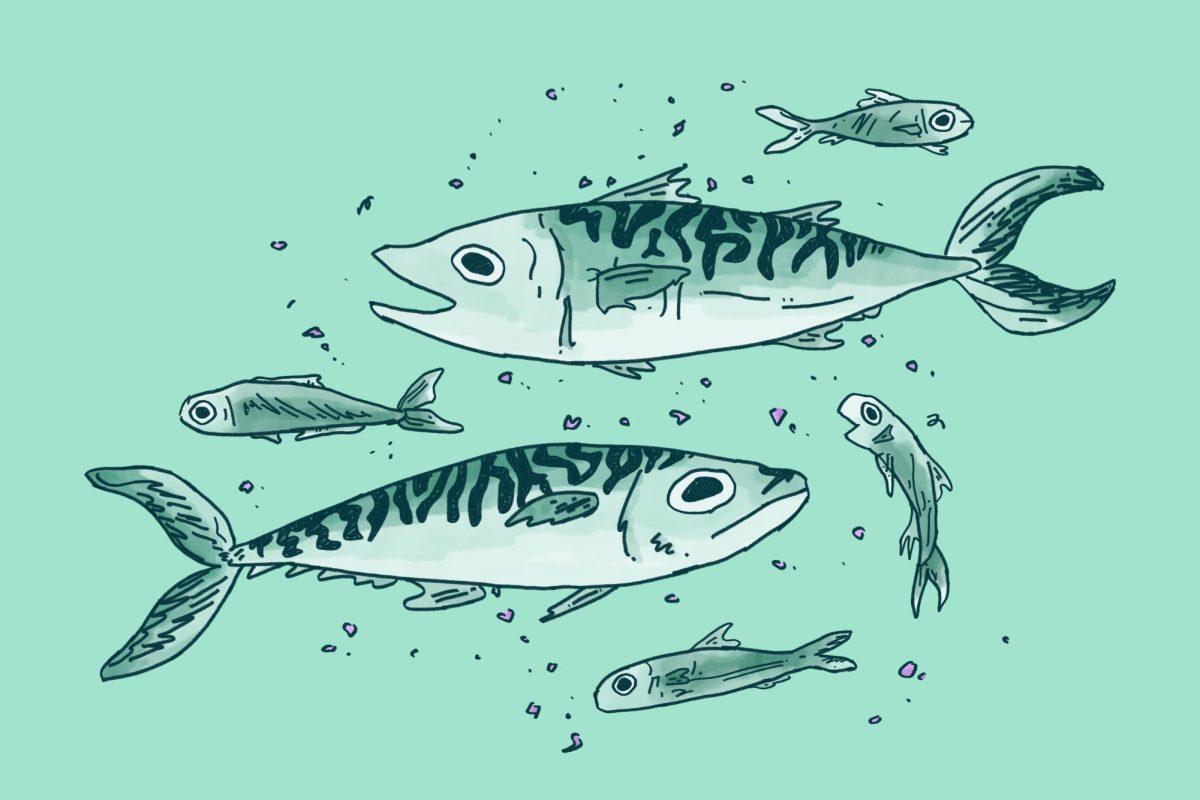
At the University of Bonn in Germany, researchers are taking inspiration from filter-feeding fish. These species of fish, including anchovies and mackerel, survive by swimming with their mouths open. This action enables water to flow through their unique gill structures, which separate food from water.
Fish gills use the motion of water itself to guide the food particles along curved surfaces, preventing clogging entirely. When water enters a fish’s mouth, it flows through funnel-shaped gill arches. As the particles move with the current, they roll along the gills’ surfaces and are moved away while the clean water is released through small gaps. The particles don’t get stuck or pile up, allowing the process to stay efficient regardless of the amount of water passing through. With this living model in mind, the Bonn research team designed a microplastic filter inspired by fish for washing machines. The filter utilizes a cone shaped filter with mesh, which allows wastewater to flow in a way that separates the microplastics from clean water. Rather than being trapped, the fibers move away into a separate collection area.
In tests, the fish-inspired filter removed more than 99% of microplastic fibers from washing machine wastewater without clogging. This is an extreme improvement from typical filters, which clog easily as debris builds up. Moreover, the microplastic filter does not need intricate membranes or complex moving parts, making it sturdy while being less expensive than other filters. The collected tiny fibers could potentially be compressed in the washing machine and removed after multiple washes, reducing the maintenance required for its users.
However, the impacts of this microplastic filter apply to more than just laundry rooms. Washing machines are a large source of microplastic pollution around the globe. By stopping these fibers at the source, the amount that enters ecosystems could be significantly reduced. Instead of trying to clean microplastics when they are already in the environment, this concept prevents pollution at the source.
More importantly, this innovation highlights a shift in how environmental issues are being tackled. Scientists are now helping technology adapt to nature, instead of having nature adapt to technology. Fish have filtered water for millions of years, far before washing machines or microplastic fibers were even invented. This fish-inspired filter is not complex, yet it can compete with the average filter by working smoothly and efficiently without pausing.
As microplastics continue to infiltrate our everyday lives, the solution may not be larger machines or advanced filters, but instead making an effort to work with nature’s own designs. By borrowing systems that fish have evolved in the ocean, researchers have demonstrated to us that a promising start to fighting microplastic pollution can begin in an ordinary laundry room. This teaches us an important lesson that the smartest solutions are possibly the ones nature has already discovered.