

















































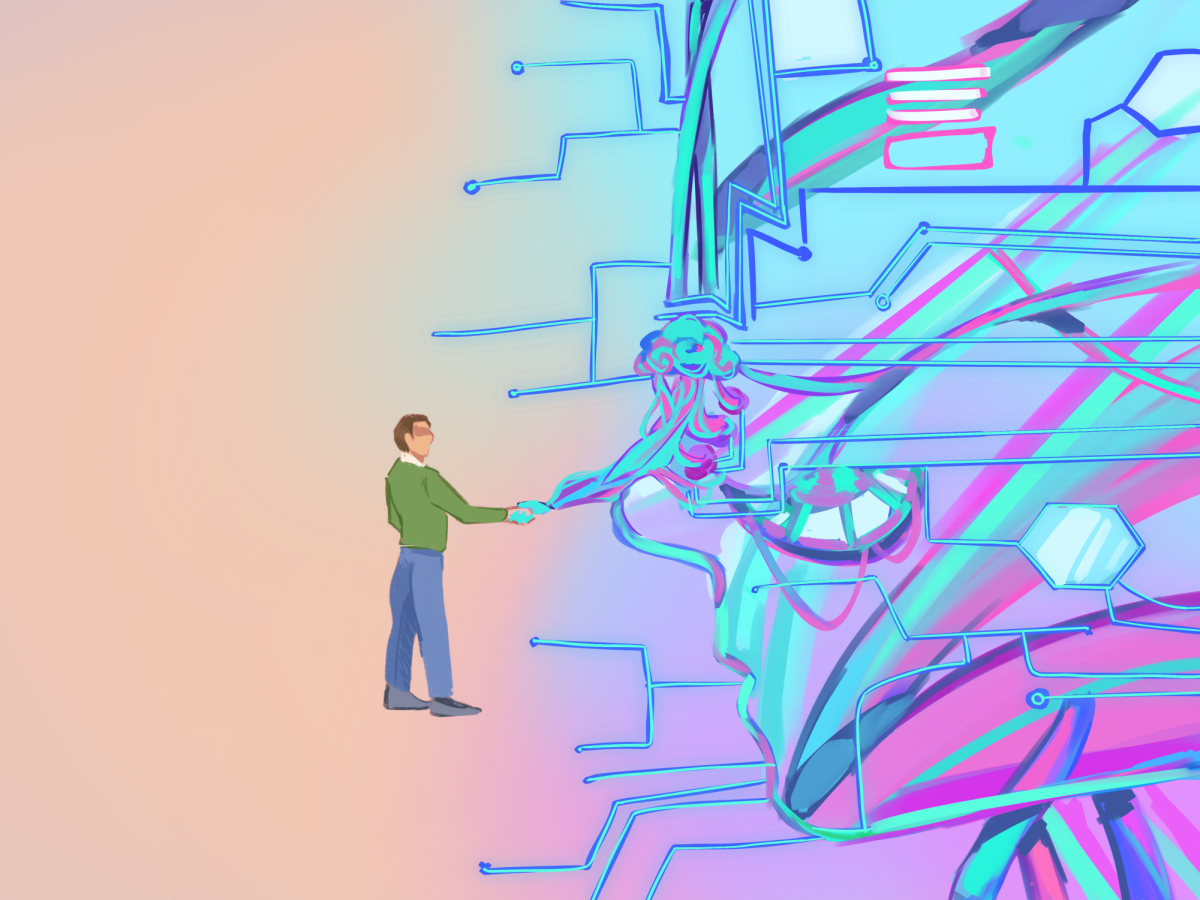
Whether we like it or not, artificial intelligence (AI) is the future; there is no escaping it. From workplaces to healthcare to entertainment, the AI movement has already begun and will continue to enter every aspect of our lives. School, a place meant to prepare us for that very future, should be no exception. Rather than avoiding AI, we need to learn how to use it responsibly and effectively.
Currently, schools are trying to limit AI in all aspects of education, from forcing the majority of essays and projects to be completed in class to using faulty AI detectors. The real fear lies in the fact that if students start letting AI do all their thinking for them, creativity, problem solving, and original thought will be lost. Teachers worry that students will become overly dependent on chatbots, their constant use eroding the ability to write essays or complete projects using their own brain. If schools become a place where students are unable to learn these unique abilities, we will become indistinguishable from AI. That’s the entire challenge of it: figuring out where to draw the line in education to ensure AI can be a helper but not a crutch.
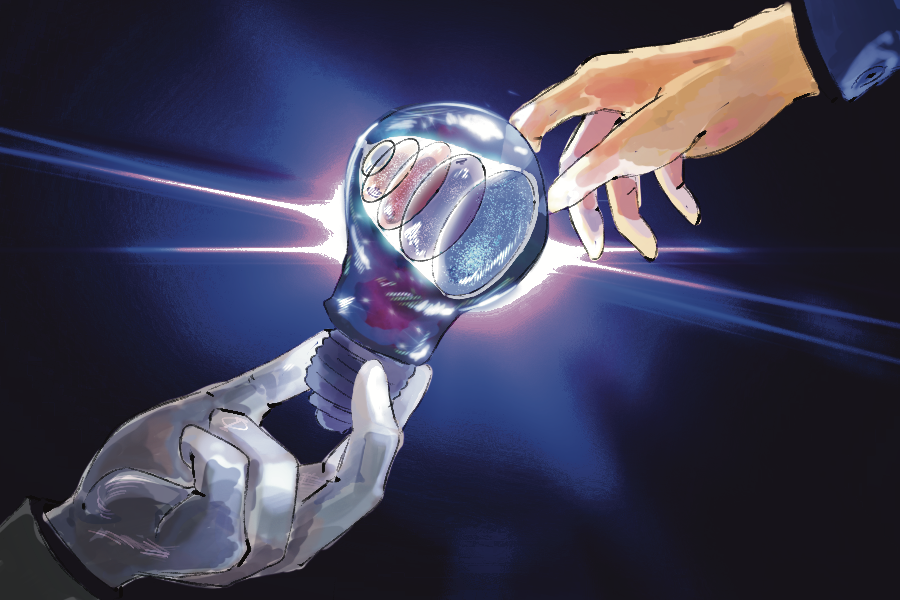
However, AI isn’t going anywhere. This is why I believe in a balanced approach. Some areas of education should stay free from AI to allow students to think independently. Why not teach students how to use it as the tool it’s meant to be? Schools should create classes or workshops that show how we can use AI tools for research, brainstorming, or studying. When used correctly, AI can actively supplement students’ learning rather than hinder it. Think about it this way: when calculators first became available, many were worried that they would ruin students’ abilities in math. Now we use calculators to enhance our math skills, not replace them. That same mindset should be applied to AI. If used correctly, AI can help students focus on higher levels of thinking and not get mired down by repetitive or basic tasks. For instance, once it is apparent that students have mastered basic writing skills and researching skills, AI could be provided so that the students could produce thoughts and just have the chatbots supplement and rearrange their ideas so that they are more comprehensive.
In this way, AI can be reshaped into something that directly aids students’ learning rather than replace it. Some essays, tests, and projects should remain in class to prevent students from using AI, letting them develop their own personal voice and analysis. At the same time, other areas can be enriched with AI. For instance, AI can become a study tool, grammar checker, or personal tutor that can explain confusing concepts using a different approach than a teacher might. By combining both traditional and modern methods, schools can create a system that values both human intelligence and technological progress. AI is here to stay, and pretending it isn’t will not prepare us for the future. Rather than fearing it, we should understand it: its strengths, its flaws, and its challenges to learning. Education has always moved forward with innovation, and AI is merely the next chapter. With guidance, balance, and ethical use, it can become a tool that strengthens, not weakens, the human mind.