














































































In one of the most closely watched elections in California’s history, the majority of voters have approved Proposition 50, a California constitutional amendment that will temporarily reshape the redistricting process of the state. As a result, it will dramatically alter political party representation. Consequently, the passing of this proposition has brought up many questions about California’s longstanding approach to nonpartisan map drawing and how this law could affect the balance between equity and political philosophy in California.
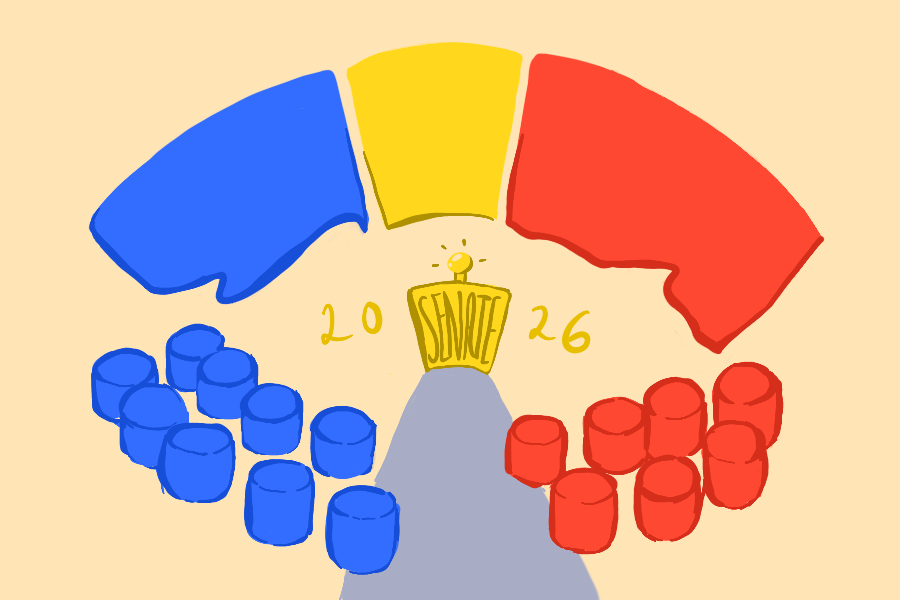
Prop 50 allows the California state legislature to redraw the congressional district maps for the 2026, 2028, and 2030 elections, temporarily suspending the exclusive authority of the Citizens Redistricting Commission, the former authors of California’s congressional district maps. The commission, first established by voters in order to remove political party bias from the redistricting process, is set to regain control following the 2030 census. Prop 50 was introduced as a response to what California lawmakers described as a large increase in redistricting for a specific political party’s gain (case in point, in Texas) that they argued could interfere with the authentic national representation in the United States House of Representatives.
In the eyes of its supporters, Prop 50 is an act of self-defense rather than one motivated by political opportunity. Supporters argue that California’s strict adherence to independent redistricting had placed it at a disadvantage in comparison to other states that have redrawn their boundaries to favor a specific party. In their view, the amendment is a temporary attempt to ensure that California voters are not marginalized by other states’ partisan politics. Through the measure being approved by a majority public vote, and the state’s commitment to non-partisan redistricting continuing after 2030, supporters emphasize that the bill was created to recognize the will of the electorate, rather than the intentions of a specific party.
On the other hand, critics view Prop 50 as a betrayal of the political ideals that Californians once stood for. They believe that the Citizens Redistricting Commission was a model of democratic reform, designed to keep political bias out of the defining of electoral boundaries. Opponents argue that even the temporary ability for the legislature to assume control over redistricting has opened the door to the abuses that the original commission was designed to avert. They believe that, since the legislature has now been given the power to shape their own districts, it will be impossible for the independent Citizens Redistricting Commission to regain control.
Beyond the opposing opinions, Prop 50 is already introducing various complications. County election offices will have to educate the public about the newly drawn districts, as well as adjust the voter rolls. Prop 50 comes with both financial and practical costs, but supporters believe that the long-term benefit will outweigh the consequences, while critics contend that the bill is an erosion of trust.
In a larger sense, the debate on Prop 50 is simply a conversation about democracy: whether adherence to principles should remain, even when they are abandoned by others, or whether adaptation is crucial to the survival of politics in an increasingly divided country. While for some Prop 50 is a representation of pragmatic realism and a statement that fairness cannot exist in an uneven playing field, to others it is an act of submission to the compromise of integrity in order to achieve political gain.
By approving Prop 50, California voters have made a bold and uncertain choice. The success of the measure highlights the tension between political parties over the philosophy of democracy that defines this period of governance. Whether it strengthens or weakens democratic representation in California will only be known in the future. But for now, Proposition 50 is a reflection of the ever-changing balance between principles and power in the politics of today’s world.