Dominic So ('27)
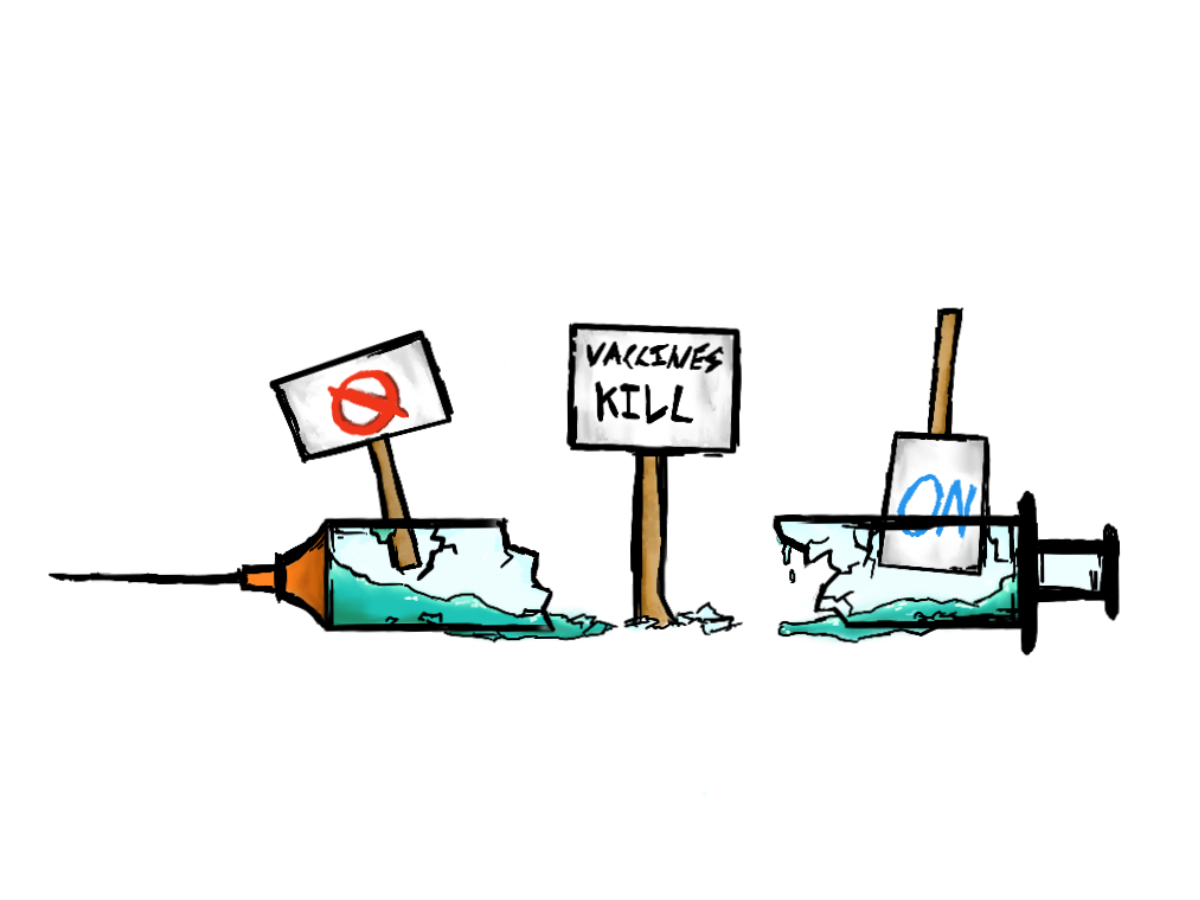
Antivax protests disrupt vaccinations.
As eight-year-old James Phipps gripped his mother’s hand while watching Doctor Edward Jenner cut his skin to insert material from a cowpox patient, it is likely that he was confused. He experienced mild symptoms from the insertion, recovered, and forgot about it. Six months later, the doctor introduced pus from a deadly smallpox patient into his blood. This time, Phipps felt nothing. That young boy changed history in 1796 England by becoming the first successful vaccination story.
Since 1976, vaccines have come a long way. Modern immunization looks nothing like Jenner’s methods. Instead of incisions in a home study, we visit sterile clinics for a quick prick that introduces a protective strain into our bodies. Yet, as long as vaccines have existed, they have had a younger brother: the anti-vax movement. Just as Jenner pioneered the vaccine, Reverend Edmund Massey pioneered its resistance, calling it a “dangerous and sinful practice.” His movement found allies who feared everything, such as the literal sprouting of cow horns.
Today, while vaccines have matured, the anti-vax movement remains largely unchanged, though they have swapped threats of horns for debunked claims of autism. But this specific brand of misinformation is uniquely dangerous. Usually, propaganda hurts only the believer. With vaccines, however, choosing to abstain endangers the entire community. This is where herd immunity—when enough people in an area have immunity to a disease that it no longer spreads easily—becomes critical. Many who aren’t anti-vax still skip vaccines, thinking they are unnecessary. But vaccines are not magic shields; vulnerable populations, newborns, the elderly, and the immunocompromised can still contract diseases. They rely on the rest of us for protection. Science indicates that 70%–90% of a population must be vaccinated to achieve herd immunity. We must reject the misconceptions pushed by groups who are not scientists.
Smallpox killed 200 million people in the 20th century. Because the world followed the example of James Phipps and trusted science, smallpox no longer exists. The COVID-19 pandemic should similarly have demonstrated the beauty of vaccines; instead, it was weaponized for fearmongering. Even after COVID-19 vaccines saved over 14 million lives in one year and ended global quarantines, doubt persists.
In many ways, we have become victims of our own success. Because vaccines are so effective, we no longer see the iron lungs that once filled hospital wards during polio outbreaks, nor do we witness the choking horror of diphtheria. These diseases seem like ancient history to us, ghosts of a forgotten past, but they are merely held at bay by the invisible wall of immunization. When a society forgets the devastation of the disease, it begins to invent fears about the cure. We have started to prioritize the hypothetical risks of the solution over the guaranteed danger of the problem. Today, anti-vaccine rhetoric has permeated deep into the fibers of our society. To protect our future, we must stop listening to demagogues and start trusting those who understand science.