Dominic So ('27)
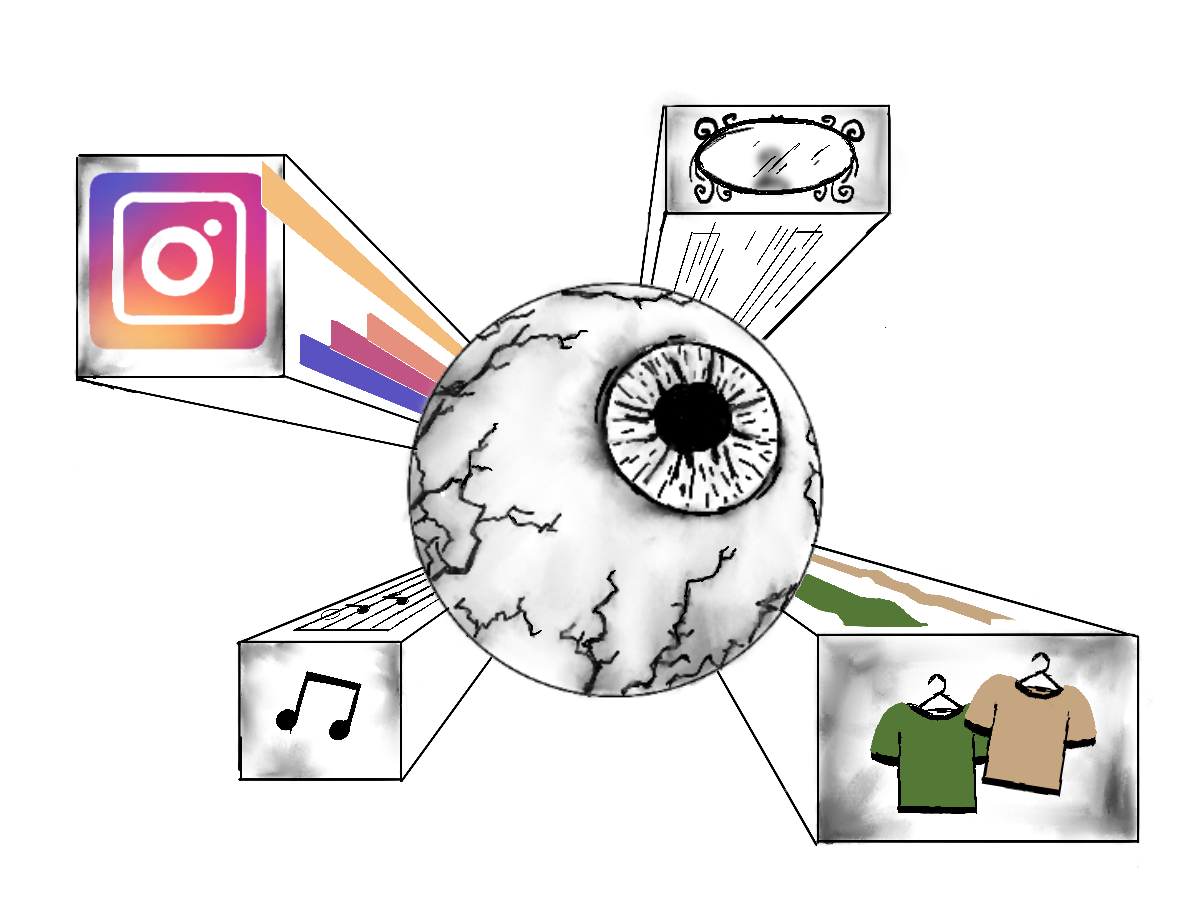
A perceptive eye surrounded by elements that characters tried to change in both "The Duff" and "Pygmalion."
This article contains spoilers!
Ari Sandel’s 2015 teen comedy The DUFF follows high school senior Bianca Piper and her experience being what her peers describe as a DUFF (“Designated Ugly Fat Friend”). Despite its direct meaning, a “DUFF” does not have to refer to one’s looks or weight; it is instead a catch-all phrase for the member of a friend group that is simply isolated from others in some shape or form. Bianca’s obscure horror film obsessions, clumsy disposition, and careless demeanor all disconnect her from her close friends Jess and Casey, who have more popular interests and therefore hold a higher social standing than herself. Because of this, her fellow students degrade her with this cruel slang term.
After Bianca’s childhood friend and football jock, Wesley Rush, tells her the meaning of this label and the fact that others refer to her in this way, she is, naturally, outraged. Out of insecurity and indignation, she separates herself from Jess and Casey and plans to break free from this label. Bianca asks for help from Wes to become more than just a “DUFF,” and in exchange for help with his science homework, he begins to teach her the proper clothes to wear, hobbies to have, and things to say.
The film’s emphasis on the power of language as portrayed through the modern-day lens of social media is based off of a similar tale of transformation in Pygmalion. George Bernard Shaw’s 1912 play centers on a man named Henry Higgins, a pretentious phonetics professor who bets with a fellow professor that he can change Eliza Doolittle, a common, uneducated flower girl, into a refined young woman worthy of partaking in high society. The play follows Eliza’s transformation and ultimate feeling of betrayal by Higgins, who comes to treat her not as a woman deserving of respect, but simply a successful scientific experiment. In spite of his disrespect, Eliza still finds acceptance within herself, recognizing that her identity does not hold more or less worth depending on her social standing or appearance.
It’s crucial to note The DUFF’s effort to emphasize the detrimental effects social media holds on Bianca’s self-perception and consequential efforts to change how she is viewed by her peers. The anonymity offered by platforms such as Snapchat, Instagram, and others mentioned in the film make it so that people can be more careless with their words and actions. In this way, Eliza’s feelings of insignificance and insecurity in Pygmalion are intensified even further for Bianca. Through social media, some of Bianca’s most vulnerable moments during her transformation are showcased for the world to see.
Both the film and the play end with emphasis on the power of self-respect and honesty about one’s passions. While Eliza ends the play satisfied and alone, freed from the judgement of Henry Higgins, the movie rendition notably modifies Pygmalion‘s original story; in The DUFF, Wes comes to see Bianca in the same positive light that she learns to see in herself, and the movie concludes with them together. Regardless, both versions take care to show how the protagonist’s main objective shifts from that of external appearance to their own sense of internal acceptance.