Emma Lee ('27)
Different cultural norms when eating.
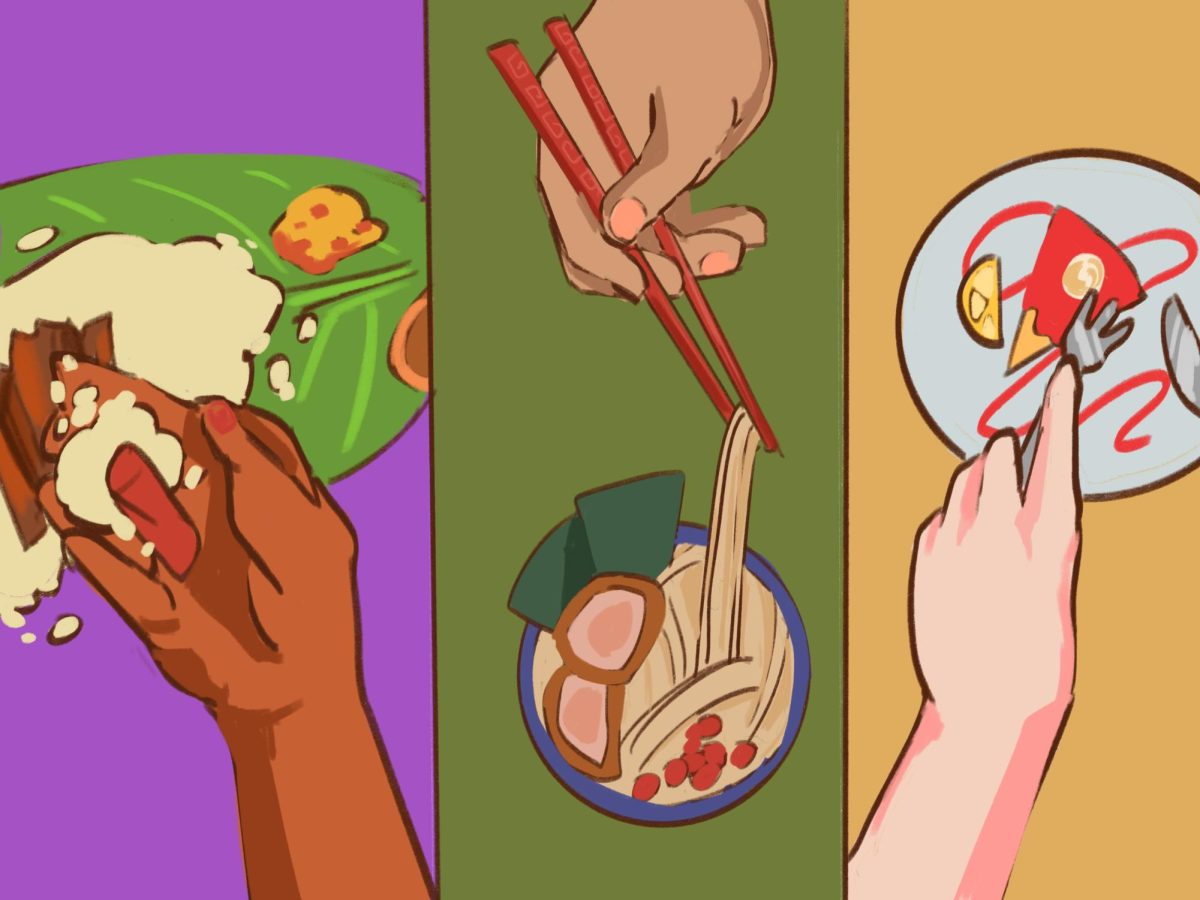
During our formative years, there is a certain emphasis put on eating etiquette, such as not playing with our food, or being too picky, or wasting it. We are also taught how to eat our food properly. When I was younger, I was always taught to eat my homemade South Indian meals with my right hand, a common practice across many cultures. When I went to India, everytime we attended a cultural event, we would eat sitting criss-cross, using plantain leaves as plates. This was very different from eating at a table with forks and knives in Western cultures, or using chopsticks in many Asian cuisines. While the importance of how we eat is recognized all around the world, the practices for how it is done are very different. So where did these traditions come from? And do they actually have a nutritional impact?
One way that cultural practices differ is in the tools and methods we use to eat. Eating with the hands for example, is one of the earliest and most common methods. Often misunderstood as unclean by the Western world, hygiene is actually highly emphasized through rules such as only using the right hand to eat and washing hands before and after meals. Touching food with one’s hands provides many benefits, such as better engaging the body’s cephalic phase of digestion, where our bodies’ sensation of food triggers digestive processes in anticipation of eating. Eating with the hands also encourages slower and more mindful consumption, which helps improve digestion and prevents overeating.
Another way of eating utilizes chopsticks, which are believed to have originated during the Zhou dynasty and later spread to other parts of East Asia. Like all other methods of eating, their usage evolved along with changes in food preparation, leading them to be used slightly differently in the countries that adopted them. However, across all cultures, the use of chopsticks emphasizes respect and mindfulness for the meal. Like hand eating, eating with chopsticks also has many nutritional benefits. Research suggests that chopsticks are one of the slowest methods of eating, which increases the number of mouthfuls, reduces overeating, and enhances enjoyment of the food. Chopsticks are also associated with a lower glycemic response—meaning that blood sugar rises more gradually after meals—and they help with one’s metabolism.
Meanwhile, modern Western utensils first appeared in the 11th century, but only became widespread during the 17th to 18th centuries. Despite the initial slow acceptance of cutlery, eating with the hands soon became unacceptable. Later on, even more specified utensils arose. This shift reflected an increase in social sophistication and the rise of a middle class imitating “noble” dining practices; in other words, utensils became more about status than sustenance.
Cultural eating practices also differ in where and with whom people eat. In a variety of cultures, people traditionally eat seated on the ground, reflecting humility and mindfulness while also supporting digestion. Tables were used in Roman dining and became more widespread in Europe during the Middle Ages; however, meals still often involved communal spoons and knives. Today, communal dining is mostly seen with shared bowls or platters at cultural events, while individual plates and utensils dominate our daily lives.
Overall, eating practices are just as significant as the food that we eat. In a world where we have the opportunity to try so many different cuisines, an openness to different ways of eating and an eagerness to learn about the traditions behind them can foster a better understanding between different ways of life.